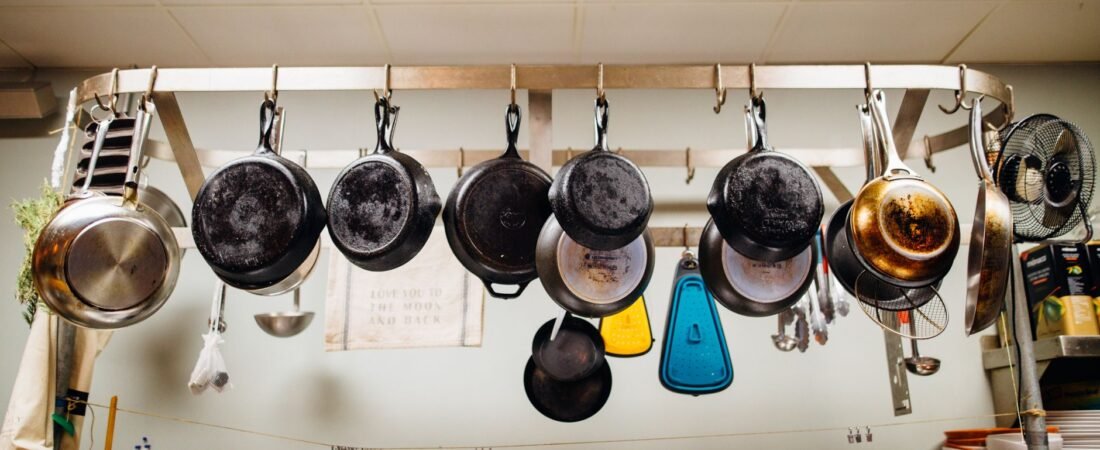
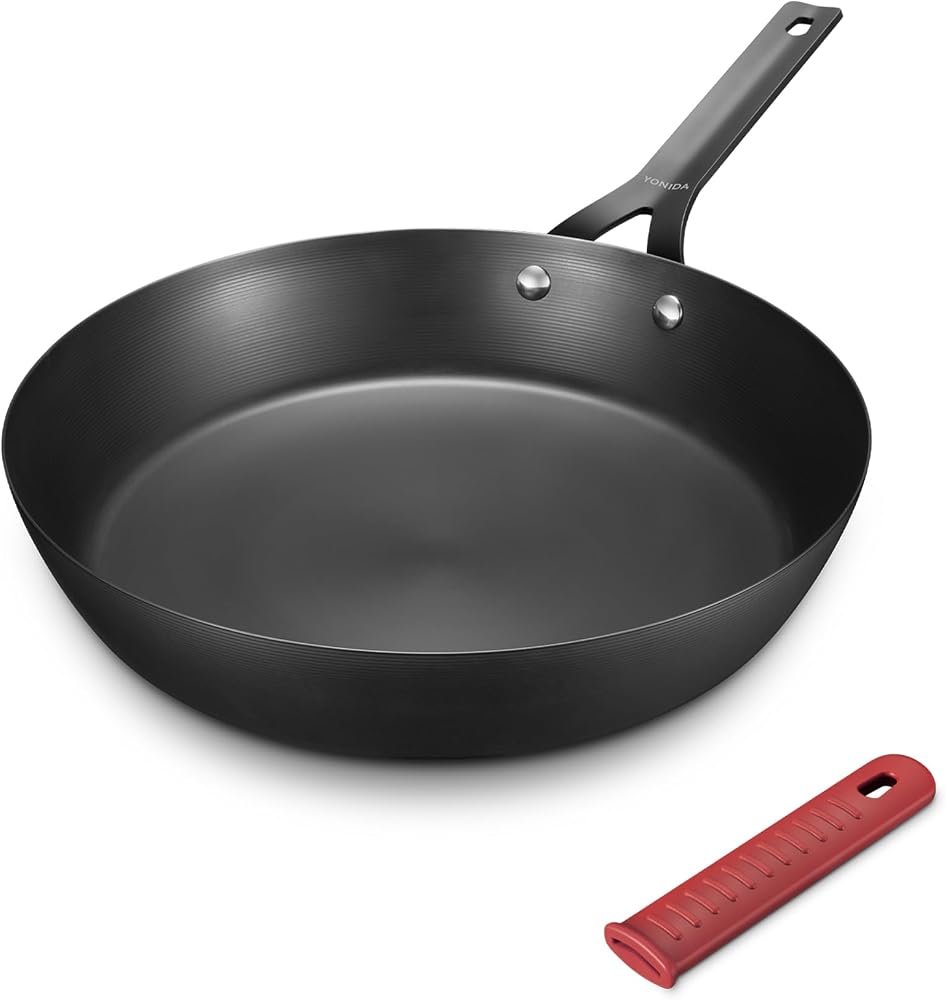
A carbon steel pan is a simple tool. It is a sheet of steel pressed into a pan shape. It heats fast and sears food well. Many cooks use one for eggs, steaks, and stir-fry.
This guide does not test pans. We do not have a lab. Instead, we show you how to read a listing. You will learn what specs matter and what to check before you buy.
We look at four real Amazon listings. Each one has a price and a rating. We use those facts exactly as they appear. You can use them to compare your choices.
As an Amazon Associate we earn from qualifying purchases. Prices and availability change — the links below go to Amazon.
Quick picks — all four
Key Takeaways
Key Takeaways
- Carbon steel is light and heats fast.
- It needs seasoning to stop rust.
- Size and handle shape change how you cook.
- Check the listing for weight and thickness.
- Prices and ratings change over time.
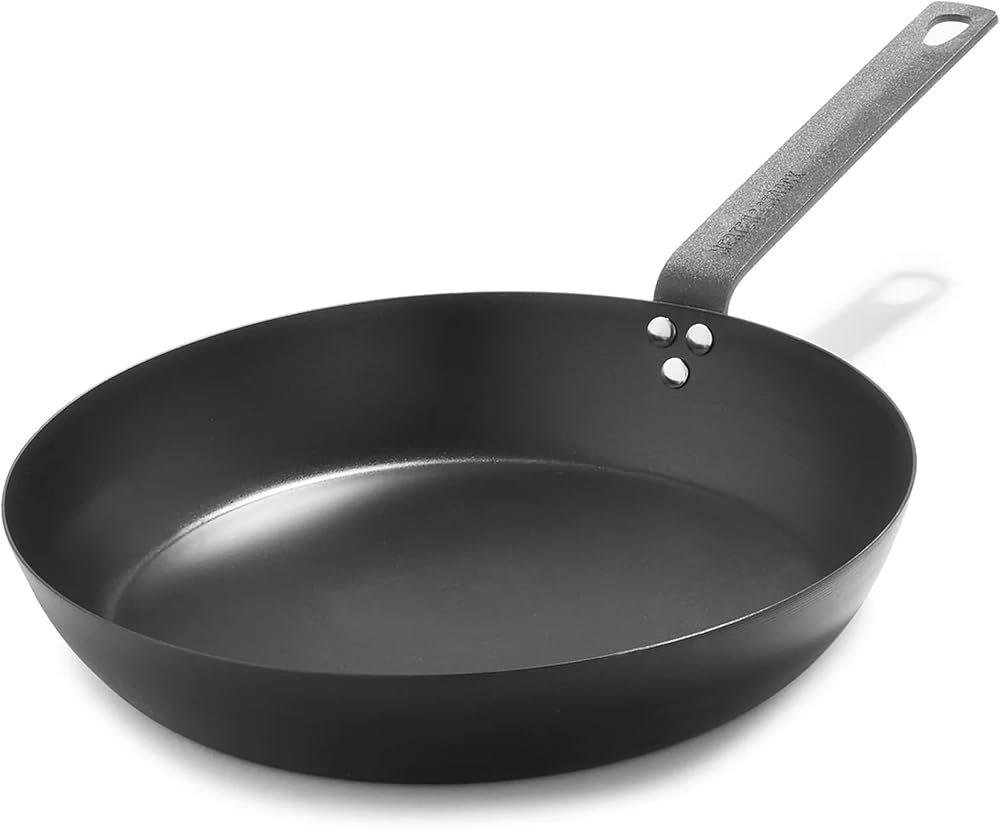
Merten & Storck 12″ Pre-Seasoned Carbon Steel Frying Pan Skillet

The Merten & Storck 12″ Pre-Seasoned Carbon Steel Frying Pan Skillet is a large pan. It comes preseasoned from the factory. That means you can cook right away.
This pan is 12 inches wide. That size fits a lot of food. It works well for family meals or batch cooking. The preseasoned finish saves you time at the start.
- Large 12-inch cooking surface
- Comes preseasoned
- Good for family meals
- Heavier than smaller pans
- Needs a large burner
- Higher price than some options
Check the listing for the pan’s weight and thickness. Those specs are not in our data. They matter for how the pan feels in your hand.
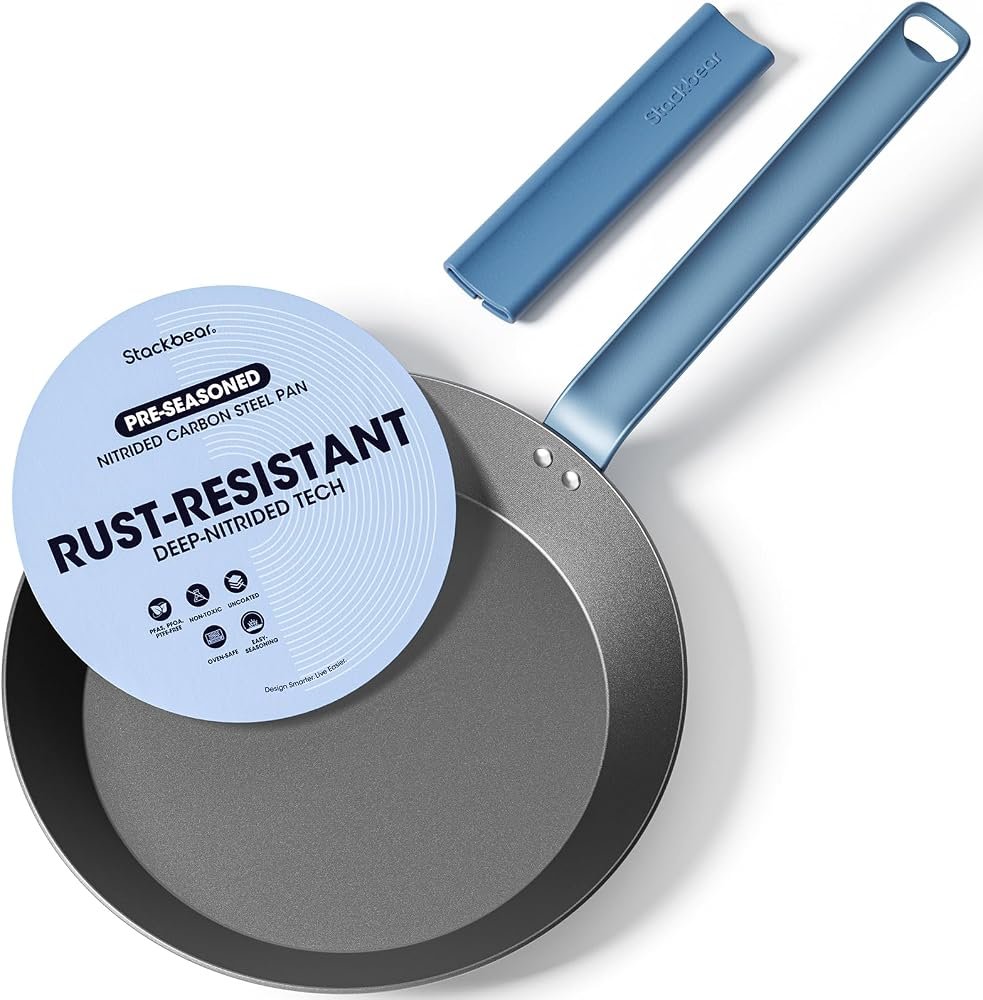
10 Inch Carbon Steel Frying Pan, Nitrided Preseasoned Skillet

The 10 Inch Carbon Steel Frying Pan, Nitrided Preseasoned Skillet is a smaller pan. It is 10 inches wide. It comes preseasoned and nitrided.
Nitriding is a surface treatment. It can help the pan resist rust. This pan is a good size for one or two people. It is also easier to store.
- Nitrided surface may resist rust
- Preseasoned and ready to use
- Lower price point
- Smaller cooking area
- Fewer reviews than some pans
- Check induction fit on the listing
This pan has 164 ratings. That is fewer than the other pans here. Read the reviews to learn what buyers say about the nitrided finish.
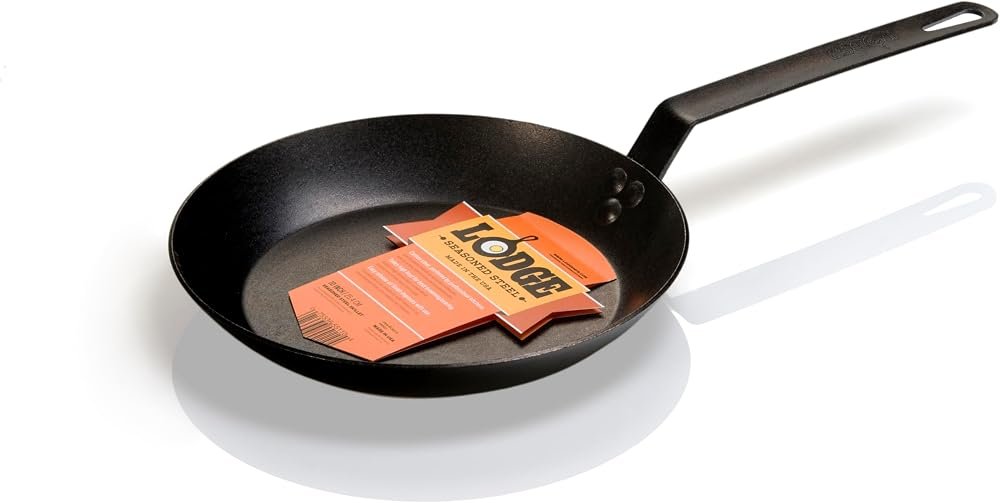
Lodge Pre-Seasoned Carbon Steel Skillet, Long Handle, 10 Inches

The Lodge Pre-Seasoned Carbon Steel Skillet, Long Handle, 10 Inches is a 10-inch pan. It has a long handle. That gives you reach and control.
This pan comes preseasoned. Lodge is a known name in cast iron and steel cookware. The long handle helps you keep your hand away from the heat.
- Long handle for better grip
- Preseasoned and ready to use
- Many ratings from buyers
- 10-inch size may be small for some
- Long handle needs storage space
- Check weight on the listing
This pan has 7,816 ratings. That is the most in this group. More ratings can give you a better feel for how the pan holds up over time.
Carbon Steel Pan, 12 Inch Nonstick Frying Pan Skillet

The Carbon Steel Pan, 12 Inch Nonstick Frying Pan Skillet is a large pan. It is 12 inches wide. The listing calls it nonstick.
A nonstick coating can make cleanup easier. It can also help with foods that stick. But a coated pan may not build the same seasoning as a bare steel pan.
- Large 12-inch surface
- Nonstick coating for easy release
- Good for sticky foods
- Coating may wear over time
- Fewer ratings than some pans
- Check coating care on the listing
This pan has 144 ratings. Read the reviews to see how the coating holds up. Also check the listing for care instructions.
What Is a Carbon Steel Pan?
A carbon steel pan is made from iron and a small amount of carbon. It looks like a cast iron pan. But it is thinner and lighter. That makes it easier to lift and toss.
The steel surface is smooth. It takes seasoning well. Seasoning is a layer of baked-on oil. It gives the pan a dark, slick coat. That coat helps food release and fights rust.
Carbon steel heats up fast. It also cools down fast when you take it off the heat. That gives you quick control. You can move from a hard sear to a gentle finish.
How It Differs From Cast Iron
Cast iron is thick and heavy. It holds heat for a long time. Carbon steel is thinner. It responds to heat changes faster. Both need seasoning and both can rust.
Carbon steel is often lighter. That matters if you flip food or lift the pan a lot. A lighter pan is easier on your wrist. It is also easier to store.
Neither pan is better for everyone. Pick based on how you cook. If you want fast heat changes, carbon steel can help. If you want steady heat, cast iron may fit.
Why Cooks Like Carbon Steel
Carbon steel is a workhorse pan. It can go from the stove to the oven. Many cooks use it for high-heat searing. It can also handle eggs once seasoned well.
The pan takes on flavor over time. The seasoning builds up with each use. That patina helps food release. It also adds a bit of character to the pan.
Carbon steel is also affordable. You can find pans at many price points. A good pan can last for years if you care for it.
Common Uses
People use carbon steel for many tasks. Here are a few common ones:
- Searing steaks and chops
- Cooking eggs and omelets
- Stir-frying vegetables
- Baking cornbread or pizza
- Toasting nuts and spices
The pan works on gas, electric, and induction stoves. Check the listing to confirm induction fit. Not every pan works on induction.
How to Read a Carbon Steel Pan Listing
A listing gives you facts. You need to know which facts matter. Start with the size. Then look at the handle and the preseasoning.
Read the full title. It often tells you the size and the finish. For example, a title may say “pre-seasoned” or “nitrided.” Those words tell you how the pan was treated.
Check the price and the rating. But do not stop there. Read the reviews for clues about real use.
Size and Shape
Pan size is measured across the top. A 10-inch pan is good for one or two eggs. A 12-inch pan fits more food. It is better for family meals.
Think about your stove. A big pan needs a big burner. If the pan is wider than the burner, it may heat unevenly. Check your burner size before you buy.
Also think about storage. A 12-inch pan takes up more space. Measure your cabinet before you order.
Preseasoning and Finish
Some pans come preseasoned. That means the maker added a coat of oil at the factory. You can cook right away. But you may still want to add more seasoning over time.
Other pans come bare. You must season them yourself. That takes time and oil. But you control the finish from the start.
Some pans are nitrided. Nitriding is a treatment that hardens the surface. It can help resist rust. Check the listing to see if a pan is nitrided.
Handle and Weight
The handle shape changes how the pan feels. A long handle gives you reach. A short handle is compact. Some handles stay cooler than others.
Weight matters too. A lighter pan is easier to lift. A heavier pan feels more stable. Check the listing for the weight if it is shown.
If weight is not listed, ask the seller. Or look for a pan you can hold in a store. Your wrist will tell you what works.
Comparison Table
| Product | Price | Rating | Reviews |
|---|---|---|---|
| Merten & Storck 12″ Pre-Seasoned Carbon Steel Frying Pan Skillet | $59.95 | 4.2 | 5,535 |
| 10 Inch Carbon Steel Frying Pan, Nitrided Preseasoned Skillet | $39.99 | 4.3 | 164 |
| Lodge Pre-Seasoned Carbon Steel Skillet, Long Handle, 10 Inches | $39.90 | 4.3 | 7,816 |
| Carbon Steel Pan, 12 Inch Nonstick Frying Pan Skillet | $51.56 | 4.4 | 144 |
How to Season a Carbon Steel Pan
Seasoning is a key step for bare steel. It stops rust and helps food release. You can season a pan in your oven or on the stove.
First, wash the pan and dry it well. Then rub a thin layer of oil over the whole surface. Use an oil with a high smoke point. Flaxseed and grapeseed oil are common picks.
Heat the pan until the oil darkens. Let it cool. Repeat this a few times. The pan will turn dark brown or black.
Oven Method
Set your oven to a high heat. Put the oiled pan upside down on a rack. Place a sheet pan below to catch drips. Bake it for about an hour.
Turn off the oven and let the pan cool inside. This slow cool helps the coat set. Repeat the process until the pan looks even.
Check your pan’s listing for any heat limits. Some handles or coatings may not be oven-safe. Always follow the maker’s guide.
Stove Method
You can also season on the stove. Put the pan on a burner over medium heat. Add a little oil. Wipe it around with a paper towel.
Keep the pan moving until the oil smokes. Then turn off the heat. Let the pan cool. Wipe off any extra oil.
Repeat this a few times. The pan will build a dark coat. This method is fast and works well for touch-ups.
How to Care for Carbon Steel
Carbon steel needs a little care. It can rust if you leave it wet. So dry it right after you wash it.
Wash the pan with warm water and a soft brush. You can use a little soap if you want. But heavy soap can strip the seasoning.
Dry the pan on the stove over low heat. Then rub a thin coat of oil on it. That coat protects the steel until the next use.
What to Avoid
Do not soak the pan in water. Do not put it in the dishwasher. Both can cause rust and ruin the seasoning.
Avoid sudden temperature changes. Do not drop a hot pan into cold water. That can warp the steel.
Do not use metal tools that scratch deep. A light scratch is fine. Deep gouges can harm the surface.
Fixing Rust and Sticky Spots
If you see rust, scrub it off with steel wool. Then wash and dry the pan. Season it again to protect the steel.
If food starts to stick, the seasoning may be thin. Add a new coat of oil and heat it. That often fixes the problem.
Keep the pan dry between uses. A dry pan is a happy pan. This one habit prevents most problems.
Choosing the Right Size
Size is a big choice. A 10-inch pan is good for small meals. A 12-inch pan fits more food. Think about how many people you cook for.
A 10-inch pan is lighter and easier to handle. It heats up fast. It is a good pick for eggs, single steaks, and small sides.
A 12-inch pan gives you more room. You can sear two steaks at once. You can also stir-fry without crowding the pan.
Match the Pan to Your Burner
Check your burner size. A pan that is too wide may heat unevenly. The edges may stay cool while the center gets hot.
If you have a small burner, a 10-inch pan may fit better. If you have a large burner, a 12-inch pan can work well.
Measure your burner before you buy. This simple step can save you from a bad fit.
Preseasoned vs. Bare Steel
Preseasoned pans come with a factory coat. You can cook right away. That is a big plus for new users.
Bare steel pans have no coat. You must season them yourself. That takes time. But you control the finish from day one.
Both types can work well. Pick based on how much time you want to spend. If you want to cook now, go preseasoned.
What About Nitrided Pans?
Nitriding is a treatment that hardens the surface. It can help the pan resist rust. It may also make the pan last longer.
A nitrided pan may need less seasoning at the start. But you should still oil it after each wash. That keeps the surface in good shape.
Check the listing to see if a pan is nitrided. Not every pan has this treatment.
Nonstick Coatings on Carbon Steel
Some carbon steel pans come with a nonstick coating. That coating helps food release. It also makes cleanup easier.
But a coated pan is different from bare steel. It may not build the same seasoning. The coating can also wear over time.
If you buy a coated pan, follow the care guide. Avoid high heat that can harm the coating. Use soft tools to protect the surface.
When to Pick a Coated Pan
Pick a coated pan if you cook sticky foods. Eggs and fish are good examples. The coating helps them slide out.
Pick a bare pan if you want a classic sear. Bare steel can take very high heat. It also builds a natural nonstick surface over time.
Think about your cooking style. That will point you to the right pan.
Induction and Other Stoves
Carbon steel can work on induction stoves. But not every pan is made for it. Check the listing before you buy.
Induction needs a flat, magnetic base. A warped pan may not heat well. Look for a pan with a flat bottom.
Gas and electric stoves are more forgiving. Most carbon steel pans work on both. Always check the listing to be sure.
Oven Use
Many carbon steel pans are oven-safe. That lets you sear on the stove and finish in the oven. It is a handy way to cook thick cuts.
Check the listing for the oven-safe temperature. Some handles or coatings have limits. Do not guess. Follow the maker’s guide.
Use a pot holder when you move the pan. The handle can get very hot in the oven.
Common Mistakes to Avoid
New users often make small mistakes. Here are a few to watch for:
- Leaving the pan wet after washing
- Using too much soap and stripping the seasoning
- Heating the pan empty for too long
- Using cold water on a hot pan
- Skipping the oil coat after each wash
Each of these can harm the pan. But each is easy to fix. A little care goes a long way.
How to Build a Better Season
Cook fatty foods at first. Bacon and sausage help build the coat. Avoid acidic foods like tomatoes at the start. Acid can strip a young seasoning.
Keep the pan dry and oiled. Use it often. The more you cook, the better the coat gets.
Do not worry about small marks. A dark, uneven pan is normal. It means the pan is working.
Frequently Asked Questions
Is carbon steel better than cast iron?
Neither is better for everyone. Carbon steel is lighter and heats faster. Cast iron holds heat longer. Pick based on how you cook.
Do I need to season a preseasoned pan?
You can cook right away. But the coat may be thin. Add more oil over time to build a better surface.
Can I use soap on my carbon steel pan?
A little mild soap is fine. Heavy soap can strip the seasoning. Dry and oil the pan after each wash.
How do I stop my pan from rusting?
Keep it dry. Oil it after each use. Store it in a dry place. These steps prevent most rust.
What size pan should I buy?
A 10-inch pan is good for small meals. A 12-inch pan fits more food. Match the size to your burner and your needs.
Are carbon steel pans oven-safe?
Many are. But check the listing for the oven-safe temperature. Some handles or coatings have limits.
Final Thoughts
A carbon steel pan is a simple, useful tool. It heats fast and sears well. With a little care, it can last for years.
Think about size, finish, and handle shape. Read the listing for weight and thickness. Check the reviews for real-world clues.
Pick the pan that fits your stove and your cooking style. Then season it, dry it, and oil it. It will serve you well.
There is no single best pan here. Each one fits a different cook. A 10-inch pan suits small meals. A 12-inch pan suits bigger ones. A preseasoned pan saves time. A bare pan gives you control. Choose based on your needs.
Tip: Check the listing for weight, thickness, and oven-safe temperature. These specs are not in our data. They matter for fit and safety.
As an Amazon Associate, The Spoonist earns from qualifying purchases. Product prices and availability are accurate as of the date/time indicated on Amazon and are subject to change.
The Spoonist
Get the deals before they sell out
One email a week. Tested gear, real price drops, one-click unsubscribe.
By subscribing you agree to our Privacy Policy.
🥇 Free: Air Fryer Time & Temp Chart
20 foods in °F & °C, the oven-to-air-fryer converter, and starting-points for Ninja, Cosori, Instant & more. Print it, stick it on the fridge.
Want all 92 foods + the rescue guide? Get the full Chart Pack →