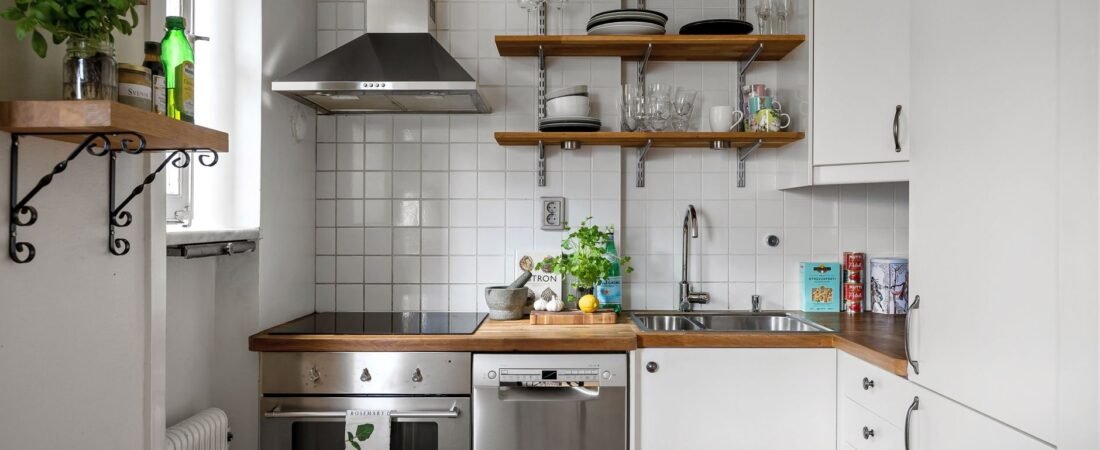
🏆 Top Picks — Quick View
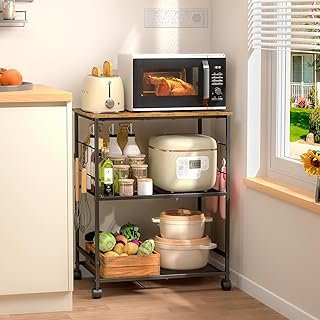 ThreeHio 3-Tier Rolling Kitchen Microwave CartBest overall pick · $49.99Check Price on Amazon
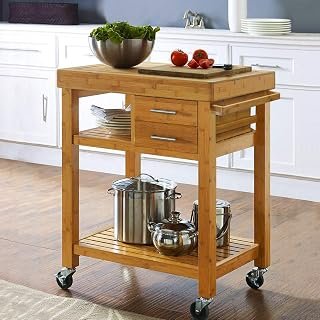 Rolling Kitchen Island Cart with Drawers, Shelves & Towel RackBest value for money · $159.95Check Price on Amazon
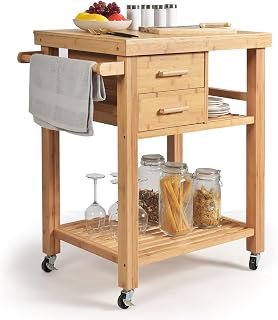 Rolling Butcher Block Kitchen Cart with Storage (Bamboo)Best premium pick · $159.99Check Price on Amazon
Living with a small kitchen usually means making peace with a few trade-offs: limited counter space, no room for a permanent island, and not enough spots to stash small appliances, cutting boards, or that collection of oils and spices you’ve quietly accumulated.
A rolling kitchen cart is one of the most practical ways to claw back usable workspace without committing to a renovation – it adds storage, prep surface, and a parking spot for your microwave or stand mixer, then rolls out of the way when dinner is done.
The hard part isn’t finding a kitchen cart; the listings are endless. The hard part is figuring out which type of cart actually solves your specific small-kitchen problem. Is it counter space you need? Hidden storage? A butcher-block surface for real prep work?
Below is a framework for thinking through those choices, followed by a close look at three rolling kitchen carts that represent the most common approaches – a budget tier-shelf, a storage-heavy island, and a wood-top workhorse – so you can match the cart to your kitchen rather than the other way around.
Key Takeaways
- Define the job first. Microwave parking, hidden storage, and prep surface are three different jobs that three different carts solve – pick the one that matches your single biggest pain point.
- Footprint matters more than features. In a small kitchen, measure the floor space and the path between the stove, sink, and fridge before you fall in love with a wider cart.
- Wheels are non-negotiable. Every cart below rolls on casters, but only some lock. Decide whether you need lockable wheels based on whether tile, hardwood, or vinyl is underfoot.
- Match the top to the task. Bamboo and butcher-block tops handle knives; engineered shelves handle appliances. Using the wrong top for the wrong job is the fastest way to ruin it.
- Read the listing, not just the headline. Exact dimensions, shelf clearance, and caster type aren’t always spelled out in the product title – check the spec sheet before you click.
How to choose a kitchen cart for a small kitchen
Before comparing models, it helps to separate the decisions that genuinely matter from the ones that just look good on a product page.
Start with the floor plan, not the cart
Small-kitchen carts fail for two reasons: they don’t fit, or they fit but block the work triangle. Pull out a tape measure and write down three numbers:
- The width of the gap where you plan to park the cart.
- The depth of the cart you’re considering (check the listing, not the photo – photos compress depth).
- The clearance between your counter edge and any island, peninsula, or appliance opposite.
Then think about how the cart moves. If it has to roll to the sink to wash produce and then back to the stove, you’ll be doing that walk many times a day. Shorter, narrower carts are easier to live with, even if they hold slightly less.
Decide what the cart’s primary job is
Most rolling kitchen carts try to do everything. That’s fine for medium kitchens. In a small kitchen, trying to do everything usually means doing nothing well. Pick the single biggest gap you’re trying to fill:
- Appliance parking: You need a stable shelf to lift a microwave, air fryer, or toaster off the counter. A simple 2- or 3-tier cart is usually enough.
- Hidden storage: You need a drawer or cabinet to hide utensils, linens, or pantry overflow. Look for carts with real enclosed storage.
- Prep surface: You cook seriously and need a real cutting surface you can roll next to the stove. A butcher-block or bamboo top is the priority.
If you can pick only one of those jobs, the rest of the choice gets simpler. The three products later in this guide each represent one of those jobs, which is why they look so different from each other.
Think about the top surface
Tops range from engineered wood with a paper laminate to solid bamboo and butcher block. The material matters because it determines what you can actually do on the cart:
- Laminate and painted surfaces wipe clean easily but are not knife-friendly. Treat them as appliance shelves, not cutting boards.
- Bamboo tops are dense, hard, and handle light to moderate knife work well. They’re also lighter than hardwood butcher block, which matters for a cart you’ll roll often.
- Butcher block is the most forgiving prep surface and can be sanded and re-oiled when it shows wear. It’s also the heaviest option, so a rolling cart with a butcher-block top needs good casters and ideally wheel locks.
Casters, locks, and floor type
If the cart is going to live on hardwood or vinyl, hard plastic or rubber casters are kinder to the floor than cheap hard plastic wheels. On tile or low-pile carpet, virtually any caster works.
Locking casters are worth looking for if you’ll be leaning on the cart to slice, chop, or mix – a rolling cart on an unlocked wheel during heavy knife work is a small but real safety issue.
Materials, weight capacity, and assembly
Two things are worth checking in the listing before you buy:
- Weight capacity per shelf – especially relevant for the bottom shelf, which often takes the brunt of microwave weight plus a few cans of dry goods.
- Assembly complexity – small carts often arrive flat-packed and ready in 20-30 minutes. Larger carts with drawers, towel bars, and multiple shelves can run an hour or more. Check reviews for assembly hints, not for star ratings alone.
The three kitchen-cart archetypes for small kitchens
The three carts below aren’t a ranked list. They represent three distinct solutions to the small-kitchen problem, and the “best” one depends entirely on which problem you’re trying to solve.
ThreeHio 3-Tier Rolling Kitchen Microwave Cart
If the only thing standing between you and a usable counter is a microwave, toaster oven, or air fryer that currently hogs your work surface, this is the type of cart to start with: a compact three-tier rolling cart built specifically to lift a microwave off the counter.
The headline case for the ThreeHio is simple. At $49.99, it’s a low-risk way to add a dedicated appliance shelf plus two more tiers of open storage.
Open shelves are useful in small kitchens because you can see what you have – no rummaging through cabinets to find the stand-mixer attachment or the bag of rice.
The trade-off is dust visibility and visual clutter, which is worth considering if your small kitchen is also your open-plan living area.
With a -star listing rating, the ThreeHio has the strongest review score of the three carts in this guide. That’s a meaningful signal at the budget tier, where construction shortcuts are common.
- Lowest price point of the three, so it’s the easiest to try in a small space without major commitment.
- Three open tiers give you a microwave shelf plus two more levels of visible storage – handy for cookbooks, oils, or produce baskets.
- Rolls on casters, so it can park against a wall or roll out as a temporary island.
- Open shelves mean visible clutter; not ideal if you want a clean, minimalist look.
- The top is not designed as a cutting surface, so plan to keep your cutting board on the counter or look elsewhere.
- Check the listing for exact shelf clearance, caster material, and per-shelf weight capacity before ordering.
This cart is a fit if your priority is, in order: price, microwave/appliance parking, open storage. It’s less of a fit if you want a closed drawer to hide utensils, or a real wood surface for prep work.
Rolling Kitchen Island Cart with Drawers, Shelves & Towel Rack
Where the budget cart is an appliance shelf, this one is trying to be a small-kitchen island. It brings drawers, shelves, a towel rack, and locking casters to the party, which makes it the strongest “storage-first” pick of the three.
At $159.95, you’re paying roughly three times the ThreeHio’s price, but the difference in configuration is significant. Drawers hide the small stuff that open shelves can’t – utensils, linens, gadgets, the things that make a kitchen look messy even when it’s clean.
The towel rack is a small detail that ends up mattering a lot in a tight kitchen, where wall space for hooks is usually already spoken for.
Locking casters are a quiet upgrade: if you’ve ever tried to chop on a cart that drifts, you understand why they matter.
The -star listing rating is solid, though slightly lower than the ThreeHio’s 4.4. That’s typical of more complex carts: more parts means more chances for a delivery or assembly hiccup.
- Enclosed drawers and shelves hide clutter – the biggest visual win for an open-plan small kitchen.
- Towel rack adds function without taking up wall space.
- Locking casters make it safe to lean on for prep or to mix something heavy on top.
- Heavier and bulkier than the budget tier-shelf cart, so measure carefully.
- More parts means more assembly time – budget an hour.
- Top surface is engineered, not solid wood; treat it as a work surface for appliances and light prep, not heavy knife work.
Fit this cart if your priority list starts with storage, drawer access, and a clean visual look. Skip it if you’d rather have a real wood prep surface or you’re trying to keep the spend under $75.
Rolling Butcher Block Kitchen Cart with Storage (Bamboo)
The third archetype flips the priority: here the top is the star. A bamboo butcher-block surface that doubles as a rolling prep station, then tucks away against the wall when dinner is plated.
At $159.99, this is priced almost identically to the storage-heavy island above, but the value proposition is different.
You’re paying for a real wood work surface, which is genuinely useful if you cook often enough that a 12×12-inch plastic cutting board on the counter has started to feel cramped.
Bamboo is a particularly smart pick for a rolling cart – it’s lighter than maple or walnut butcher block, which makes the cart easier to move, and it has a tight grain that resists knife marks better than softer woods.
The -star listing rating matches the storage-island option, and for good reason – both are feature-rich carts in the same price band. As with that cart, the slight complexity penalty shows up in the assembly step and in shipping damage reports, so it’s worth checking the listing for packaging details.
- Bamboo top handles real knife work, which neither of the other two carts does well.
- Lighter than hardwood butcher block, so it’s easier to roll even loaded with gear.
- Doubles as a serving cart or a temporary baking station for big projects.
- Wood tops need occasional oiling to stay looking good – plan for that maintenance.
- Heavier than the all-engineered tier-shelf cart, so check caster quality and locking mechanism carefully.
- If your priority is hiding clutter, an open-shelf wood cart won’t deliver the same visual calm as the drawer-based island.
This cart is the right pick if your priority list starts with prep surface, knife work, and rolling the wood top to wherever you’re cooking. It’s less ideal if you specifically need drawers or if you want the lowest possible price.
Side-by-side: which cart matches your small kitchen?
The table below lines up the three carts on the few facts that actually drive a small-kitchen decision. Specs like exact dimensions, shelf clearance, and per-shelf weight limits vary by listing and are worth confirming on the product page before you order.
| Feature | ThreeHio 3-Tier Rolling Kitchen Microwave Cart | Rolling Kitchen Island Cart with Drawers, Shelves & Towel Rack | Rolling Butcher Block Kitchen Cart with Storage (Bamboo) |
|---|---|---|---|
| Price | $49.99 | $159.95 | $159.99 |
| Listing rating | 4.4 out of 5 | 4.2 out of 5 | 4.2 out of 5 |
| Best job | Microwave / appliance parking | Hidden storage + towel rack | Real prep surface |
| Top surface | Engineered (not for knives) | Engineered (not for knives) | Bamboo butcher block (knife-friendly) |
| Storage type | Open shelves (3 tiers) | Drawers + open shelves | Open storage + butcher block top |
| Casters | Wheels (check locking on listing) | Locking casters | Wheels (check locking on listing) |
| Towel rack | No | Yes | No |
| Maintenance | Wipe clean | Wipe clean | Occasional oiling for bamboo top |
| Price tier | Budget | Premium storage | Premium prep surface |
How to evaluate any kitchen-cart listing
Beyond the three options above, it’s worth knowing what to look for in any rolling cart you find, especially at the budget end of the market. The specs matter because the marketing rarely tells the whole story.
What the listing should answer
- Exact assembled dimensions, including depth. If the listing only gives you a stylized product photo, scroll to the spec table or look at the Q&A.
- Shelf clearance between tiers. A microwave is usually 10-12 inches tall; an air fryer can be 13-14 inches. The gap between shelves has to fit the appliance you actually own.
- Per-shelf weight capacity. Microwaves are heavier than they look – a compact microwave is often 25-30 lbs, so a bottom shelf rated for 30 lbs is the realistic minimum.
- Caster type and whether any lock. Locking casters matter more on wood-top carts than on tier-shelf carts.
- Materials used for the top, sides, and shelves. “Solid wood,” “bamboo,” “MDF with laminate,” and “rubberwood” all behave very differently.
What the listing usually doesn’t tell you
- How it feels in person. Photos flatter carts. Reviews are your best proxy for sturdiness – look for repeated mentions of wobble, tipping, or shipping damage.
- How it ages. Engineered tops can swell near sinks or dishwashers. Bamboo holds up but darkens with sun exposure over time.
- How it actually rolls once loaded. Small wheels on heavy loads are a common complaint. Larger casters roll much better on thresholds and uneven tile.
Common small-kitchen-cart mistakes (and how to avoid them)
Buying the biggest cart that fits
The temptation in a small kitchen is to maximize storage. The reality is that the biggest cart that fits is usually too big to live with – it blocks sightlines, slows you down, and ends up parked permanently in one spot because moving it is annoying. Buy the smallest cart that solves your primary problem.
Ignoring the floor
Hard plastic casters on soft vinyl or hardwood floors will eventually leave marks. If your kitchen has either surface, look for rubber casters or add furniture pads. Locking casters also reduce drift that can quietly scratch floors over months.
Choosing wood where you need wipe-clean
A beautiful bamboo top is not the right pick if your actual workflow involves rolling the cart next to the stove and getting flour and oil on it daily. Wood needs care. If you don’t want to oil it twice a year, pick an engineered top.
Forgetting the door swing
Appliance garage? Pantry door? Fridge door? Measure where each one swings and make sure the cart’s parked position doesn’t block any of them. A cart that blocks the fridge is a cart you’ll resent by week two.
Frequently asked questions
What size kitchen cart fits in a small kitchen?
There’s no single number, but for most galley and L-shaped small kitchens, carts in the 24-36 inch wide range tend to work best. Measure the gap you have available, then check the assembled depth on the listing – not the photo – before ordering.
Are butcher block tops worth it for a rolling cart?
If you actually cook – chopping vegetables, breaking down chicken, working dough – a butcher-block or bamboo top is worth the small maintenance trade-off. If you mostly want a place to park a microwave, an engineered top is fine and easier to live with.
Do I need locking casters?
Yes if you’ll lean on the cart for prep or mix something heavy on top. No if the cart will sit in one spot and only roll out occasionally. On hardwood or vinyl floors, locking casters also help prevent slow drift that can scratch the surface over time.
How much weight can a small kitchen cart hold?
Per-shelf weight capacity varies by listing, so check the product page for the exact number rather than estimating. As a sanity check, a compact microwave alone is often 25-30 lbs, so the shelf holding it needs to clear that comfortably.
Is a kitchen cart better than a kitchen island in a small kitchen?
For most small kitchens, yes. A fixed island eats floor space permanently. A rolling cart gives you that same work surface when you need it and gets out of the way when you don’t. The trade-off is stability – fixed islands don’t drift – which is why locking casters matter.
The bottom line
There isn’t one “best” kitchen cart for every small kitchen. There are three jobs to fill – appliance parking, hidden storage, and prep surface – and each of the carts above does one of them well.
The ThreeHio 3-Tier is the easy budget pick for lifting a microwave off the counter at $49.99 with a 4.4-star listing.
The Rolling Kitchen Island Cart with Drawers, Shelves & Towel Rack is the right pick if your priority is closed storage and a tidy look, at $159.95 with a 4.2-star listing.
The Rolling Butcher Block Kitchen Cart with Storage (Bamboo) is the answer if you want a real wood prep surface, at $159.99 with a 4.2-star listing.
Before you click, do three things: measure the gap where the cart will live, decide which single job matters most in your kitchen, and read the listing for exact dimensions, shelf clearance, and caster details. Those three checks will do more for your satisfaction than any star rating.
Related Guides
- Best Kitchen Tools for Busy Moms (2026)
- Must-Have Kitchen Gadgets for Beginners
- Best Single Serve Coffee Maker for Dorm (2026)
As an Amazon Associate, The Spoonist earns from qualifying purchases. Product prices and availability are accurate as of the date/time indicated on Amazon and are subject to change.