🏆 Top Picks — Quick View
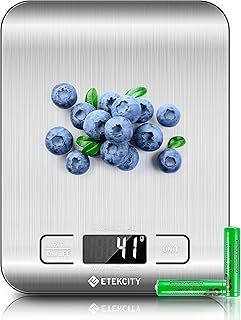 Etekcity Food Kitchen Scale (Digital Grams & Ounces, 11lb, Tare)Best overall pick · $13.99Check Price on Amazon
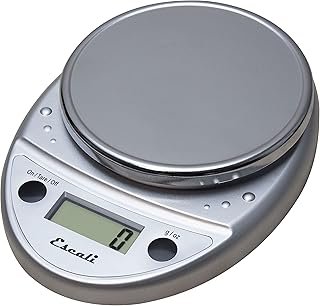 Escali Primo Digital Multifunctional Scale (Baking Scale)Best value for money · $25.00Check Price on Amazon
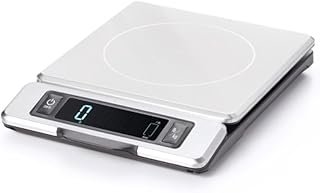 OXO Good Grips 11-Pound Digital Kitchen Food Scale (Pull-Out Display)Best premium pick · $62.95Check Price on Amazon
If you have ever pulled a dry, dense loaf of bread or a cake that sank in the middle from the oven, the culprit was almost certainly measurement, not oven temperature.
A reliable kitchen scale is one of the biggest upgrades a home baker can make, because baking is chemistry, and chemistry depends on ratios. Cups measure volume, which shifts with humidity, how firmly you pack a flour scoop, and whether you sift first.
Grams do not have that problem. This guide walks through what to look for in a baking scale, how to evaluate the tradeoffs between three commonly recommended options, and how to choose the right one for the way you actually bake.
Quick Answer
For most home bakers, a digital scale with a tare button, gram-and-ounce units, and about 11 pounds of capacity covers everything from a single egg to a big batch of bread dough. This guide’s three picks: the Etekcity at $13.99 for tight budgets, the Escali Primo at $25.00 (4.6 stars) for everyday baking, and the OXO Good Grips with pull-out display at $62.95 if you bake with large bowls.
Weighing ingredients in grams instead of measuring by volume removes the cup-to-cup variability that can swing a cup of flour by roughly 30 grams.
Table of Contents
- Quick Answer
- Key Takeaways
- Why Weighing Ingredients Matters in Baking
- Who Should Skip a Kitchen Scale
- What to Look for in a Baking Scale
- Do You Need a 0.1-Gram Scale for Baking?
- How Much Capacity Do You Need?
- How We Chose These Scales
- Product Reviews
- Side-by-Side Comparison
- How to Choose the Right Scale for You
- Verdict
- Frequently Asked Questions
Key Takeaways
- For most home bakers, a scale with a tare button, gram-and-ounce units, and at least a few pounds of capacity covers everything from a single egg to a big batch of bread dough.
- Display readability matters more than people expect. A big mixing bowl hiding the readout is a real, daily annoyance.
- This guide covers three models across the typical price spread: a budget classic, a mid-priced option, and a premium pick with a pull-out display.
- Match the scale to the baking you do. A weekend sourdough hobbyist has different needs than someone measuring espresso shots.
Why Weighing Ingredients Matters in Baking
Professional bakers weigh almost everything, and once you try it, the habit is hard to shake. A cup of all-purpose flour can weigh anywhere from roughly 120 to 150 grams depending on whether the flour is fluffed, scooped, or spooned and leveled. A scale takes that variability off the table.
The same recipe measured by grams produces the same batter every time, regardless of how careful you are with your measuring cups. This matters most for recipes that depend on hydration ratios, like yeasted breads, enriched doughs, and laminated pastries.
It also matters for anything involving meringue, macarons, or delicate cakes where a small swing in flour or sugar changes the texture noticeably.
Cookies are more forgiving, which is why many home bakers keep their cups for cookies and reach for a scale for everything else.
Beyond flour
Butter, chocolate, honey, and sticky ingredients are also easier to weigh than to measure.
Many baking scales include a tare function that lets you zero out the weight of a bowl, add an ingredient, hit tare again, and add the next ingredient into the same bowl.
That cuts down on dishes and makes recipe scaling painless, since you can multiply or divide by a factor and weigh straight from the new numbers.
Who Should Skip a Kitchen Scale
A scale is not mandatory for every baker. If you mostly bake forgiving recipes — chocolate chip cookies, brownies, quick breads, muffins — volume measuring has worked for decades and will keep working. Before you buy, it is worth being honest about which of these describes you:
- You bake a few times a year, and drawer space matters more to you than the consistency gain.
- Your recipes are written in cups, and you have no plans to convert them.
- You already own a scale you like; a nicer display is a want, not a need.
If none of those apply — or you are getting into bread, macarons, or other ratio-sensitive baking — a scale stops being optional and starts being the tool you reach for first.
What to Look for in a Baking Scale
There is no single feature that makes a scale the best baking scale for every kitchen, but there are a handful of specs that separate the models worth owning from the ones that end up in a drawer.
Capacity and resolution
For most home bakers, a capacity of about 11 pounds is plenty of headroom for a big batch of bread dough or a mixing bowl piled high with vegetables for a double batch of muffins.
Resolution, the smallest increment the scale reads, is harder to judge from a listing because manufacturers phrase it differently.
The rule of thumb for baking is simple: if it reads in grams and increments of a gram or smaller, you can confidently weigh yeast, salt, and leaveners.
Beyond that, look for a model that gives you at least one extra digit past what you need so you are not skimming the bottom of the scale’s range.
Tare function
Tare is not optional for baking. It is the button that zeros out the bowl so you can measure ingredients sequentially. Every scale worth considering has it.
What varies is how the button feels under your thumb, how quickly the display stabilizes, and whether the scale holds the tare when you remove and replace a bowl. If you can, try the button feel in person.
A stiff, clicky tare button gets old fast when you are zeroing between six ingredients.
Units
Grams are the unit you will use most of the time for baking. Ounces are handy for American recipes that have not been converted, and pounds show up on a few old bread formulas.
Most scales offer grams, ounces, and pounds, with a button to switch between them. The faster that switch happens, the more likely you are to actually use the right unit instead of mentally converting in your head while your butter softens.
Display readability
Here is the feature most buyers underweight when they are shopping. A scale with a tiny, dim display that sits flush with the platform is fine until you put a large mixing bowl on it.
Suddenly you are crouched, peering under a rim, trying to read numbers. A pull-out or detached display solves the problem completely; a large, well-placed display solves it most of the time; a low-profile display solves it never.
If you bake with a stand mixer bowl or a tall Dutch oven, pay close attention to how the display is positioned.
Surface and platform
Stainless steel platforms wipe clean in seconds. Plastic platforms are lighter and warmer to the touch but can stain from turmeric, berry juice, or coffee. Either works; just think about whether you want to hand-wash or wipe. Removable platforms that lift off the base are easier to clean thoroughly.
Power and battery
Most digital kitchen scales run on AA or AAA batteries, and some include an AC adapter. Auto-off is standard, which is good for battery life but annoying when you are mid-recipe and the scale times out. Some models let you disable auto-off, and that small toggle is worth its weight for serious bakers.
Tip: When you weigh flour, spoon it into the bowl and let it settle naturally rather than shaking or packing it. The gram weight you see on the scale is the one the recipe author used, so the lighter, naturally settled method is the one that matches published recipes.
Do You Need a 0.1-Gram Scale for Baking?
Most baking scales read in 1-gram increments, and for the vast majority of home baking that is precise enough. Recipes express yeast, salt, and other small quantities in whole grams, and a 1-gram scale reads those amounts directly.
A 0.1-gram scale earns its keep in a few specific cases: weighing sourdough starter feedings by ratio, measuring small amounts of instant yeast for long ferments, or coffee and espresso, where 0.1-gram precision is standard.
If your baking is cookies, cakes, and bread from published recipes, a 1-gram scale is sufficient — put the extra money toward a better display instead. If you do want finer resolution, confirm the increment in grams on the listing before buying, since some listings state precision only in ounces.
How Much Capacity Do You Need?
Capacity is the maximum weight a scale can read, and it includes everything sitting on the platform — bowl included.
For most home baking, a large mixing bowl plus a wet bread dough stays well under 8 pounds, which is why the 11-pound class is the standard choice for home kitchens.
Both the Etekcity and the OXO in this guide are rated for 11 pounds; the Escali’s capacity is not published in the product data we verify against, so confirm it on the listing if that number matters to you.
If you regularly weigh very large batches — multiple loaves at once, canning, or big-batch meal prep — look for a scale rated above 11 pounds. Also note that many scales drop resolution as loads approach capacity, switching from 1-gram to 0.1-ounce increments. That is normal behavior, not a defect, but check the listing if you need 1-gram resolution at heavier loads.
How We Chose These Scales
Every product in this guide is checked against its live Amazon listing, and every spec in this article comes from that listing or from manufacturer documentation. Where a number is not published — exact gram resolution, battery type, timeout behavior, capacity — we say check the listing instead of guessing.
We narrowed the field to three models that cover the typical price spread for home baking scales: a budget option near $14, a mid-range option near $25, and a premium option near $63.
We prioritized the features that matter for baking specifically — gram units, a tare function, capacity, and display visibility — and we note each model’s limitations in the reviews below.
Prices and star ratings were verified at the time of writing and are subject to change.
Product Reviews
Best for tight budgets
Etekcity Food Kitchen Scale (Digital Grams & Ounces, 11lb, Tare)
$13.99 · 4.6 stars · Amazon listing rating
The Etekcity digital scale is the budget classic in this category. Listed at $13.99 on Amazon with a 4.6-star listing rating, it covers the basics a baker needs: gram and ounce units, an 11-pound capacity, and a tare function. The platform is wide enough for most mixing bowls, and the footprint is small enough to live in a drawer or stand upright on a counter.
Pros
- Lowest price of the group, so the upgrade from cups to a scale costs almost nothing.
- 11-pound capacity handles bread dough and big bowls.
- Grams and ounces cover American and metric recipes.
Cons
- Display sits flush with the platform, so a large mixing bowl can block the readout.
- Plastic platform may stain from strongly colored ingredients.
- Build is light; treat it gently if you want it to last.
Best for everyday baking
Escali Primo Digital Multifunctional Scale (Baking Scale)
$25.00 · 4.6 stars · Amazon listing rating
The Escali Primo is the mid-priced option in this group. At $25.00 on Amazon with a 4.6-star listing rating, it sits between the other two picks on price.
The platform is a smooth, easy-to-clean surface, the buttons are large and obvious, and the display sits at a slight angle on top of the platform rather than flush with it, which helps with visibility under a bowl.
If you bake weekly and want a straightforward scale without paying for extras you will not use, the Primo covers the essentials.
Pros
- Large, clearly labeled buttons with a tactile tare feel.
- Display is angled and positioned for better visibility.
- Price sits between the other two picks, with the core baking features covered.
Cons
- Higher price than the budget pick without the premium features of the OXO.
- Display still lives on the platform, so very large bowls can obscure it.
- Auto-off may interrupt long workflows; check the listing for the exact timeout.
Best for big bowls and frequent bakers
OXO Good Grips 11-Pound Digital Kitchen Food Scale (Pull-Out Display)
$62.95 · 4.4 stars · Amazon listing rating
The OXO Good Grips 11-pound digital scale with pull-out display is the premium pick in this group. Listed at $62.95 on Amazon with a 4.4-star listing rating, it costs more than four times the budget pick and about two and a half times the Escali.
The headline feature is the display, which slides out from beneath the platform so you can see it even when a tall mixing bowl covers the scale’s top. That pull-out display is more useful than it sounds.
If you bake with a stand mixer bowl or a Dutch oven, you already know the frustration of trying to read a number from the side. The OXO sidesteps that problem.
Pros
- Pull-out display solves the visibility problem under large bowls.
- 11-pound capacity covers virtually any home baking project.
- Wide base with room for large mixing bowls.
Cons
- Highest price of the three options by a meaningful margin.
- Lower listing rating than the other two models, so check recent reviews before buying.
- Bulkier than the smaller scales; needs more counter or drawer space.
Side-by-Side Comparison
| Model | Listed Price | Listing Rating | Capacity | Units | Tare | Display |
|---|---|---|---|---|---|---|
| Etekcity Food Kitchen Scale | $13.99 | 4.6 | 11 lb | Grams & ounces | Yes | Flush platform display |
| Escali Primo Digital Multifunctional Scale | $25.00 | 4.6 | Check listing | Check listing | Yes | Angled platform display |
| OXO Good Grips 11-Pound Digital Kitchen Food Scale | $62.95 | 4.4 | 11 lb | Check listing | Yes | Pull-out display |
Specs like exact gram resolution, battery type, and unit options are worth confirming on each product listing before you buy, since the table above only reflects the facts available in our product data.
How to Choose the Right Scale for You
The best way to decide is to think about the baking you actually do, not the baking you imagine doing someday.
If you bake once a month and want to retire your measuring cups without much fuss, the budget Etekcity covers the essentials and leaves the rest of your budget for ingredients.
If you bake most weekends and want a step up in display visibility, the Escali Primo’s angled display helps without the OXO’s price.
If you bake frequently, work with big bowls or heavy doughs, and have ever crouched down trying to read a hidden display, the pull-out screen on the OXO is worth the premium.
There are also a few situations where none of these three are the right answer. If you bake mostly sourdough at very high hydration, check that any scale you buy can handle the weight of a wet, heavy dough plus a bowl.
If you bake mostly delicate pastry and need very fine resolution, look for a scale that reads in increments smaller than a gram and confirm that on the listing before you commit.
If you bake in a small kitchen with limited storage, the slimmest profile among the three is the easier daily companion.
Verdict
All three scales here include a tare function, and weighing ingredients in grams will make your baking more consistent than volume measuring. The right pick depends on how much the display, build quality, and price matter to you.
For most readers, the Escali Primo at $25.00 is the easiest recommendation because it balances price, features, and usability. If you bake with large bowls or want the most comfortable display, the OXO at $62.95 justifies its premium. If you just need a scale and want to spend the least, the Etekcity at $13.99 will get you measuring by weight today.
Frequently Asked Questions
Do I really need a kitchen scale for baking?
If you want consistent results, especially for bread, cakes, macarons, and pastries, weighing ingredients is more reliable than measuring by volume. A scale is one of the most useful baking tools you can add to your kitchen.
What capacity do I need?
For most home bakers, around 11 pounds of capacity is more than enough room for a bowl plus a heavy bread dough or a double batch of cookies. If you bake in very large quantities, look for a higher-capacity scale and confirm the exact number on the listing.
Why is the display so important?
You read the display every time you add an ingredient. A hidden or hard-to-read readout slows you down and invites mistakes. A pull-out or angled display solves the most common visibility problem under large bowls.
How do I keep a kitchen scale accurate?
Use it on a flat, stable surface, avoid placing it near the edge of a counter where it can tip, and replace batteries when readings start to drift. Wiping the platform between uses also keeps residue from throwing off small measurements.
Related Guides
- Must-Have Kitchen Gadgets for Beginners
- Best Kitchen Tools for Busy Moms (2026)
- Best Air Fryer Accessories (2026)
About The Spoonist — This site started in a home kitchen, after one too many appliance guides that claimed “months of testing” and read like nobody who cooks weeknight dinners wrote them.
If you’ve ever stood in front of a dead listing or a “best air fryer” that failed in month two — that’s who we write for.
Every product here is verified against its live Amazon listing before it earns a spot, every spec comes from manufacturer documentation, and where a number isn’t published we say check the listing instead of making it up.
As an Amazon Associate, The Spoonist earns from qualifying purchases. Product prices and availability are accurate as of the date/time indicated on Amazon and are subject to change.