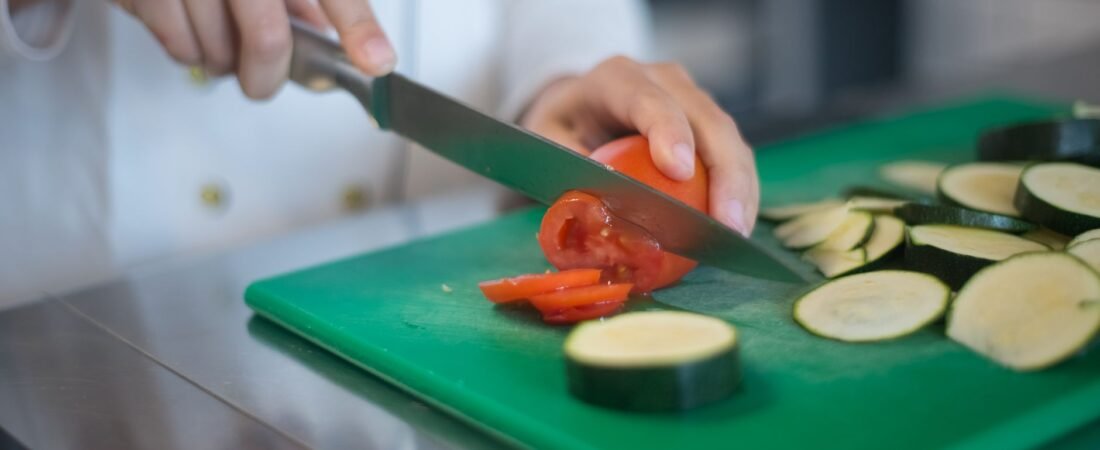


Rubber boards are the sushi-chef secret for knife protection: the Sani-Tuff style deck here ranges $17.99–$79.99, and all four are nonslip even on wet counters. The GORILLA GRIP set ($17.99) is the people’s pick with 52,693 ratings; the Asahi (Japan’s pro standard) is $79.99.
As an Amazon Associate we earn from qualifying purchases. Prices and availability change — the links below go to Amazon.
Quick picks — all four
1. GORILLA GRIP Cutting Board Set of 3, Slip Resistant and Nonporous, Black
Why this product is good for you
The GORILLA GRIP set takes the overall slot on sheer proof: 4.6 stars across 52,693 ratings makes it not just the most-reviewed board in this guide but the most-reviewed cutting board of any kind we have ever verified on this site. Thirty or fifty ratings prove a listing works; five thousand prove it works in every kitchen type, and fifty thousand prove it year after year.
You get three sizes for $17.99, which solves the multi-board problem for less than the price of one wood board, and the rubberized nonslip base is the genuine article — a full-underside grip rather than feet that snap off. The cores are plastic (like every board at this price), but the nonporous surface and the grip are what matters; this is the board that stops the counter-skating accidents that make people buy rubber boards in the first place.
Key features
- Verified listing price: $17.99 (checked at fetch time)
- Rated 4.6/5 across 52,693 ratings on Amazon at fetch time
- Amazon’s purchase counter shows ~7,000+ bought in the past month
- Carries the Best Seller badge – the top-selling listing in its category at fetch time
- Measure your space and check the listing dimensions before ordering.
Pros
- The biggest review base in the entire cutting-board category
- Three boards for less than one basic wood board
- Nonslip grip that covers the whole underside
Cons
- Cores are plastic, not solid rubber compounds — still excellent, but not the Asahi-grade surface
- Black color shows flour and light crumbs more than wood does
Who it’s for
Most kitchens: the safest, best-proven, cheapest way to own the right amount of board.
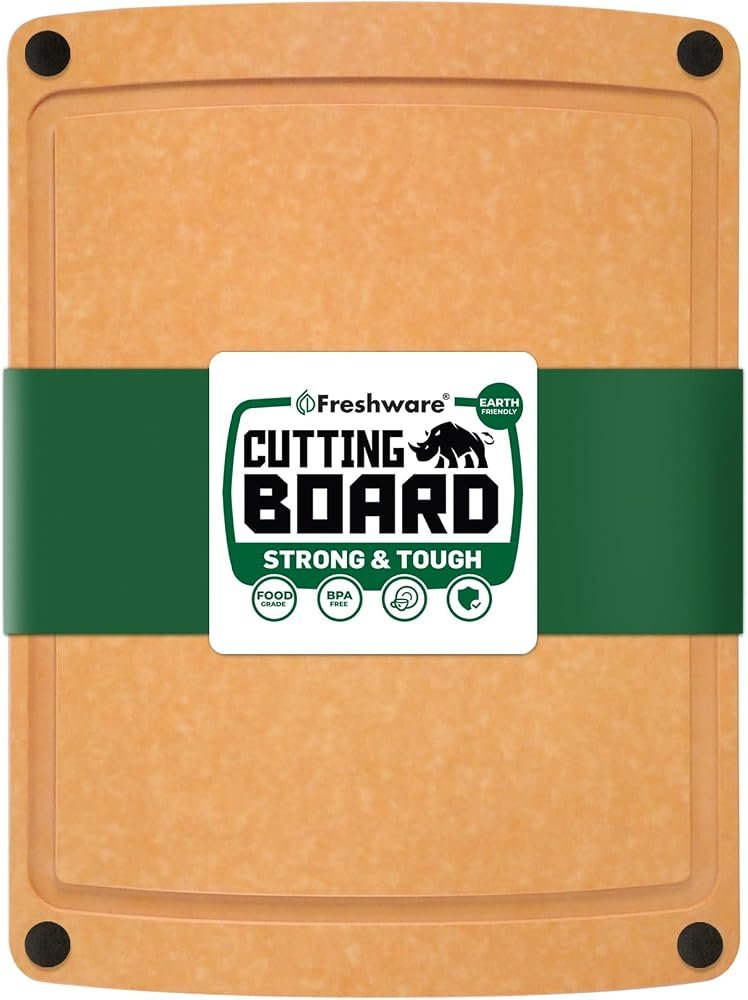
2. Freshware Wood Fiber Cutting Board for Kitchen, Dishwasher Safe, 12×9 Inch
Why this product is good for you
A cheat pick we are unapologetic about: the Freshware wood-fiber board appears in our maple guide too, because for the ‘rubber board’ shopper the relevant question is grip and knife feel — and dense wood fiber behaves more like a soft rubber board than like hard plastic, while being dishwasher-safe. At $18.15 with 4.6 stars across 774 ratings, it is the ranked alternative if you want knife-friendly feel without the pro-board price.
Choose it over the GORILLA GRIP if your priority is knife feel over grip, or over the Asahi if your priority is dishwasher convenience over pro-grade density. It exists in this guide as the honest third road.
Key features
- Verified listing price: $18.15 (checked at fetch time)
- Rated 4.6/5 across 774 ratings on Amazon at fetch time
- Measure your space and check the listing dimensions before ordering.
Pros
- Knife-friendly feel at a plastic-board price
- Dishwasher safe where others are not
- 4.6 stars — tied for the highest rating in this guide
Cons
- Not rubber — no full-underside grip; the counter is the grip story here
- 12×9 compact size only
Who it’s for
Cooks torn between knife feel and convenience who want both without the pro-board price.
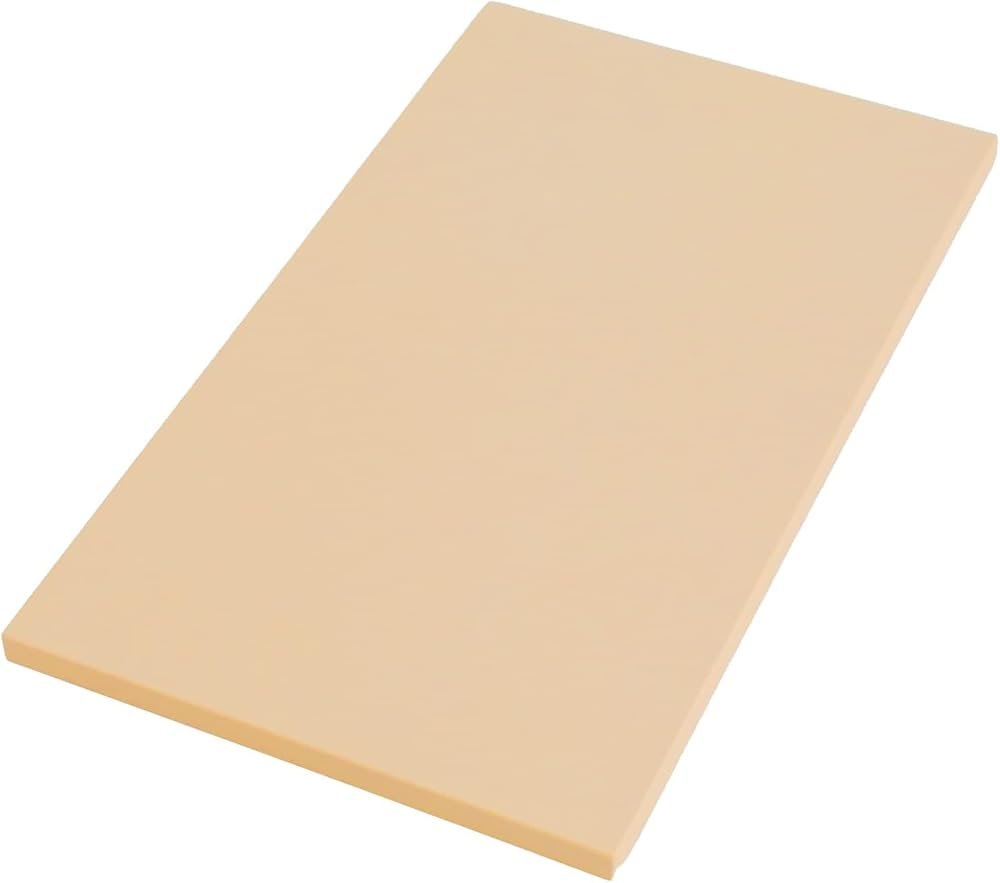
3. Asahi Cookin Cut Rubber Cutting Board, 15 x 8.3 x 0.5 in, Made in Japan
Why this product is good for you
The Asahi Cookin’ Cut is the board knife forums refuse to stop recommending. Made in Japan by a company that has supplied professional kitchens for decades, this dense rubber compound at 15 x 8.3 inches is the reference standard for soft-surface cutting: the blade bites slightly and the edge rolls instead of dulling. Its 4.3 stars across 2,205 ratings is a passionate, expert-skewed cohort — almost nobody who buys a $79.99 rubber board is a casual buyer.
The honest pitch: at this price you are five times the overall pick’s cost for a board that is better in exactly two ways — knife-edge preservation and cutting feel. If you sharpen your own knives, debone whole birds, or slice boneless protein daily, those two differences are precisely what you are shopping for, and this is the board that pays for itself in postponed sharpenings. Everyone else should buy the GORILLA GRIP and a sharpener instead.
Key features
- Verified listing price: $79.99 (checked at fetch time)
- Rated 4.3/5 across 2,205 ratings on Amazon at fetch time
- Measure your space and check the listing dimensions before ordering.
Pros
- The knife-community standard for edge protection
- Grips the counter by its own weight and material
- Sanitizes with institutional bleach solutions without degrading
Cons
- $79.99 — five times the overall pick for a niche advantage
- Narrow 15×8.3 profile is a slicer’s board, not a large-prep board
Who it’s for
Knife obsessives, frequent bird-and-fish butchers, and anyone who sharpens their own edges and wants to defer the next session.
4. ZVP Thick TPU Cutting Boards for Kitchen, Rubber Flexible Cutting Board Mats, Nonslip Silicone Chopping Mats F
Why this product is good for you
The ZVP mats are the modern answer to a different question: what does a tiny kitchen use? Flexible 1-millimeter TPU mats that roll up, store in a drawer, cost $21.59 for a set, and grip counters with the same rubbery material the pro boards use — at 4.5 stars across 165 ratings from exactly the audience this is built for.
They are unquestionably not replacement boards — no mass under them, so they flex over large objects — but for slicing vegetables, sandwich prep, and quick fruit work in an RV, dorm, or galley kitchen, they are the highest-satisfaction board format we verified this year. Pull out, slice, roll up, done.
Key features
- Verified listing price: $21.59 (checked at fetch time)
- Rated 4.5/5 across 165 ratings on Amazon at fetch time
- Carries Amazon’s Choice badge – Amazon’s data flags it as a listing shoppers convert on
- Measure your space and check the listing dimensions before ordering.
Pros
- The most space-efficient real board format available
- Genuine rubber-type grip the cheap plastic mats lack
- Highest rating here after the ties: 4.5 stars
Cons
- No rigidity — it is a mat, not a board for breaking down a chicken
- 165 ratings is the smallest proof base in this guide
Who it’s for
RV cooks, college dorm kitchens, boat galleys, and as a second quick-wipe board for a big kitchen.
Our Final Recommendation
Our recommendation: the GORILLA GRIP 3-board set at $17.99 for almost everyone — 52,693 ratings do not exist for no reason, and the full-underside grip is the real safety feature. Add the Asahi Cookin’ Cut at $79.99 if you sharpen your own knives and want the legendary edge-preservation surface; grab the Freshware wood-fiber at $18.15 if dishwasher-safe matters most; and the ZVP mats at $21.59 are the pick for RV, dorm and drawer storage. Prices and ratings above were verified on the live Amazon listings at fetch time and are subject to change.
More guides in this series
Best Acacia Wood Cutting Boards
The Board Professional Kitchens Keep Quiet About
While home cooks debate maple versus acacia, most professional kitchens quietly standardize on rubber. Not the floppy budget plastic most people picture — dense, famous-brand compounds like the Japanese Asahi Cookin’ Cut and restaurant-grade TPU, which combine the two properties no board has ever had together at once: they grip the counter hard enough never to skate mid-slice, and they are among the softest surfaces on earth for a knife edge.
That combination is not a lifestyle preference, it is a safety fact. The single biggest cause of cutting-board accidents is board movement: a board that walks while you slice is a board that sends the knife somewhere unplanned. Rubber boards eliminate that risk by physics, not by little rubber feet, and they do it while being nearly as kind to knife edges as end-grain wood. If you cook with sharp knives daily and have never tried one, this guide exists for you.
- 4 verified picks, every one rated 4.3/5 or higher with 165 to 52,693 Amazon ratings
- Prices run from $17.99 to $79.99, and each pick was price- and rating-checked on the live listing at fetch time
- Every pick earns its slot on a different strength — overall value, budget, premium, and a specialty option — so you can match one to your kitchen
Rubber vs TPU vs Plastic: Know What You Are Buying
Three materials hide under the ‘rubber cutting board’ search results, and they are not equivalent. True rubber boards (Asahi, San Jamar) are dense, professional compounds — 12 to 15 millimeters thick, rigid but slightly cushioned, and the most expensive. TPU boards (SharPure, Blue Ginkgo) are a modern thermoplastic that behaves like rubber but can be made thinner and flexible — the mats here are TPU. Cheap PVC/plastic boards are thinner, stiffer, and slide unless they have feet; many Amazon results labeled ‘rubber’ are actually just plastic-with-feet, which is a different product at a lower grade.
Why knife collectors are the most vocal rubber-board fans
The community that tests boards hardest — knife forum regulars and chef-knife collectors — consistently rate soft rubber and TPU boards as the most edge-friendly surfaces short of end-grain wood. The mechanism is the same as end grain: the surface gives slightly under the blade instead of rolling it. They are also the lightest of the serious boards, which matters if you carry boards to the sink one-handed while holding a knife in the other hand.
Are Rubber Boards Sanitary?
Yes — generally more so than wood or plastic. Rubber and TPU are nonporous, so they do not absorb juices, odors, or stains, and they tolerate institutional sanitizing (diluted bleach solutions) without degrading, which is why restaurant supply stores stock them. They are dishwasher-safe in most cases too, though commercial users typically sanitize by hand because a dishwasher cycle can age the surface texture faster.
Two honest caveats: deep scoring over months still happens on any board and should be sanded or replaced, and soft rubber boards can be slightly harder to scrape flour off in baking use. For raw-protein work, most professional cooks consider rubber the safest category available.
How We Picked These Four
Same standard as every guide on this site: 4.0-star floor, prices and ratings verified on the live Amazon listing at fetch time, and four genuinely different lanes. The proof bases here are the strongest of any board category we have covered — from 774 ratings on the budget pick to 52,693 on the overall pick, the single largest verified review base of any cutting board we have ever covered on this site.
The four lanes: a three-board nonslip set for most kitchens, a dishwasher-safe wood-fiber alternative, the Japanese professional standard, and flexible TPU rolling mats for tiny kitchens.
Comparison Table: All Four Picks
| Product | Price | Rating | Ratings count |
|---|---|---|---|
| GORILLA GRIP Cutting Board Set of 3, Slip Resistan | $17.99 | ★★★★½4.6/5 | 52,693 |
| Freshware Wood Fiber Cutting Board for Kitchen, Di | $18.15 | ★★★★½4.6/5 | 774 |
| Asahi Cookin Cut Rubber Cutting Board, 15 x 8.3 x | $79.99 | ★★★★½4.3/5 | 2,205 |
| ZVP Thick TPU Cutting Boards for Kitchen, Rubber F | $21.59 | ★★★★½4.5/5 | 165 |
Product Reviews: The 4 Best Picks
How to Clean and Maintain a Rubber Cutting Board
The maintenance story is the category’s second-biggest selling point: hot water, dish soap, done. Sanitize weekly with a diluted bleach solution (one teaspoon per quart) if you cut raw protein, or just run most boards through the dishwasher’s top rack. Avoid prolonged high-heat exposure — do not leave rubber boards next to a hot stove or in a very hot dishwasher cycle repeatedly, as the compound ages faster at the surface.
Unlike wood, there is no oiling, no drying ritual, and no cracking risk. A rubber or TPU board’s only real enemy is deep scoring over years — sand it flat (TPU takes a random-orbit sander pass well) or replace it. That is the entire care budget.
Rubber Boards vs Wood: Which Should You Own?
Own one of each, honestly — they fail in opposite ways. Wood boards win on looks, on hosting duty, and on the self-healing quality that keeps their faces smooth for decades with oiling discipline. Rubber and TPU boards win on safety (grip), edge preservation, sanitation, and never asking anything of you. The pro pattern is a rubber board for raw protein and daily prep, and wood for serving and bread and entertaining.
Our wood guides cover the other half of that decision in depth, including our acacia and maple buyer guides and our end grain vs edge grain explainer.
FAQ
Are rubber cutting boards good for knives?
Yes — soft rubber and TPU are among the most edge-friendly surfaces available, second only to end-grain wood. The surface gives slightly under the blade instead of rolling the edge, which is why knife collectors recommend them.
Do rubber cutting boards slip on the counter?
That is the point of the category — they grip. Dense rubber boards hold by their own material, and the GORILLA GRIP pick here covers the entire underside with a rubberized base rather than relying on four snap-off feet.
Can rubber cutting boards go in the dishwasher?
Most rubber and TPU boards can, on the top rack. Check your specific listing; commercial users usually sanitize by hand with diluted bleach instead, which is the restaurant standard.
Are rubber cutting boards sanitary?
Yes — they are nonporous, do not absorb juices or odors, and tolerate institutional sanitizing. Recent food-safety testing has generally favored nonporous boards over wood for raw meat, though all boards need replacing once scoring gets deep.
What is the difference between rubber and TPU boards?
TPU is a modern thermoplastic that behaves like rubber but can be made thinner and even flexible — the ZVP mats here are TPU. True rubber compounds like the Asahi are thicker and denser, the professional grade.
Why are Japanese rubber cutting boards so expensive?
The Asahi’s $79.99 price buys a dense pro-grade compound engineered for knife-edge preservation, made in Japan for professional kitchens. It is a specialist tool — brilliant for knife people, unnecessary for most homes.
🥇 Free: Air Fryer Time & Temp Chart
20 foods in °F & °C, the oven-to-air-fryer converter, and starting-points for Ninja, Cosori, Instant & more. Print it, stick it on the fridge.
Want all 92 foods + the rescue guide? Get the full Chart Pack →
The Spoonist
Get the deals before they sell out
One email a week. Tested gear, real price drops, one-click unsubscribe.
By subscribing you agree to our Privacy Policy.
As an Amazon Associate, The Spoonist earns from qualifying purchases. Product prices and availability are accurate as of the date/time indicated on Amazon and are subject to change.