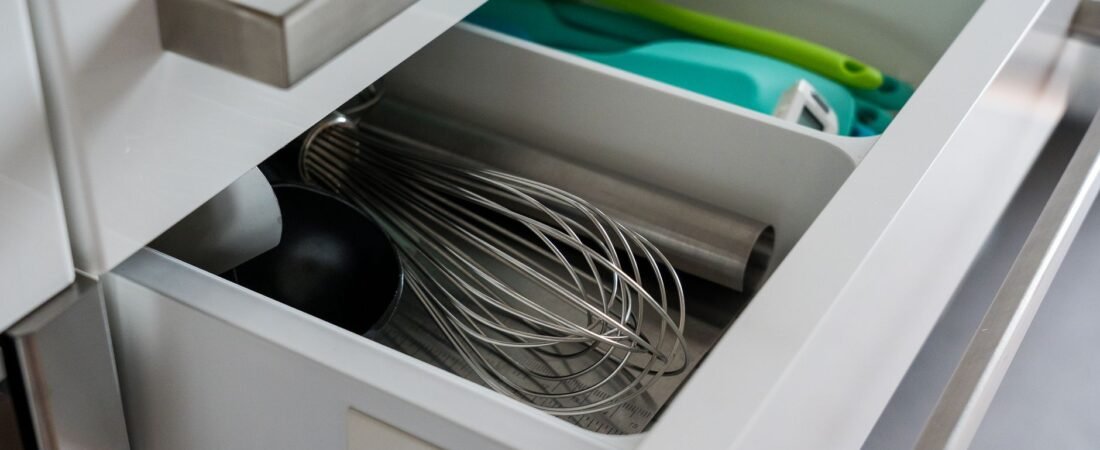
🏆 Top Picks — Quick View
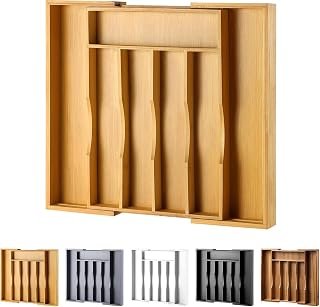 Expandable Bamboo Kitchen Drawer Organizer (Cutlery and Utensils, Adjustable)Best overall pick · $17.99Check Price on Amazon
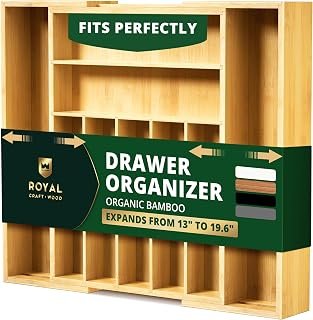 ROYAL CRAFT WOOD Luxury Bamboo Kitchen Drawer Organizer (Silverware)Best value for money · $35.87Check Price on Amazon
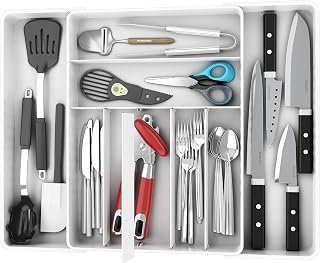 SimpleHouseware Expandable Kitchen Drawer Flatware Organizer (White)Best premium pick · $21.87Check Price on Amazon
What a Good Kitchen Drawer Organizer Actually Does for You
A kitchen drawer organizer is one of the cheapest upgrades you can make to a cooking space, and one of the few that pays you back every single day.
When your flatware stops rattling against a garlic press and your slotted spoons stop migrating to the back of the drawer, you save real time.
The interesting part isn’t picking the prettiest tray on the screen; it’s matching the tray to your drawer, your flatware inventory, and how often you actually open that drawer.
The honest way to shop for one is to slow down and look at a few specific things before you ever click a buy button: the interior dimensions of your drawer, whether you want fixed compartments or adjustable dividers, what material you prefer, and how much you’re willing to spend for an aesthetic upgrade versus pure function.
We’ll walk through each of those, and then look at three specific listings on Amazon that illustrate the spread of options.
Key Takeaways
- Measure inside your drawer, not just the face, before buying anything expandable.
- Adjustable dividers matter more than cell count if your flatware inventory changes.
- Material drives price more than any other factor in this category.
- All three organizers in this guide carry the same listing rating, so price and material become the deciding factors.
The Three Things That Actually Decide Which Organizer Is Right
1. Drawer Fit and Adjustability
The single biggest reason organizers end up returned is that they don’t fit the drawer they’re bought for. People measure the drawer face, not the interior cavity, and an organizer that’s “expandable” only expands within a published range.
Before you compare listings, get a tape measure and note three numbers: the interior width at the back of the drawer, the interior depth from front to back, and the interior height (which matters most if you have a top drawer with a face frame).
Expandable designs try to bridge awkward sizes by sliding in width, but the depth and height still have to be close. If your drawer is unusually shallow or unusually deep, a standard tray will feel wrong no matter how good its dividers are.
2. Compartment Layout vs. Adjustable Dividers
There are two schools of thought here. One is the molded tray with fixed cells for forks, knives, spoons, and a small miscellaneous well. These work great if your flatware set is conventional and you like the certainty of everything having a designated slot.
The other is the open tray with movable dividers, which lets you resize compartments as your tools change — say, when you buy a new set of steak knives or replace a turner with a fish spatula.
If your kitchen inventory is stable, fixed cells are usually tidier. If you accumulate gadgets the way most home cooks do, adjustable is more forgiving. The tradeoff is that adjustable trays tend to look a little more utilitarian when dividers are slid around, while molded trays keep their visual order no matter what.
3. Material: Bamboo vs. Plastic vs. Wood Best Expandable
Material drives both price and feel. Plastic trays are light, dishwasher-safe, and inexpensive, but they scratch and can look tired fast.
Bamboo is harder than most people realize, has a natural warmth that fits kitchens well, and sits in the middle of the price band. Solid wood organizers are heavier, often finished with a darker stain, and tend to be the priciest of the three.
None of these is “wrong” — they’re different answers to the same question.
The Three Organizers Worth Comparing Right Now
The listings below are current Amazon search results, verified on 2026-09-01. They share the same 4.6-star listing rating, which makes price, material, and adjustability the deciding factors rather than rating.
Expandable Bamboo Kitchen Drawer Organizer (Cutlery and Utensils, Adjustable)
This is the middle-of-the-road option on this list in terms of price, and it leans into the two things that matter most in this category: it’s made of bamboo, and the dividers are adjustable. The listing is positioned for both cutlery and utensils, which is a clue that the compartments are sized for a mix of flatware and slightly larger tools rather than a strict fork/knife/spoon grid.
For a cook whose flatware collection is in flux — or for a shared household where drawer contents drift week to week — the adjustability is the selling point. For a buyer who wants a set-it-and-forget-it tray with predetermined slots, this won’t deliver that tidiness.
The price is the lowest of the three bamboo options on the list, which makes it a strong default for someone who isn’t sure how much they want to invest.
- Adjustable dividers for non-standard flatware mixes
- Bamboo construction at the lowest price in this comparison
- Same 4.6-star listing rating as the other options
- No molded cells means tidiness depends on how carefully you set it up
- Specific expand range not listed in search results — verify dimensions on the listing
This is the premium pick in the group. The listing explicitly markets it as a luxury wood organizer for silverware, and the price — roughly double the expandable bamboo option — reflects that positioning. The rating is identical to the other two listings, so this is purely a buy-on-aesthetic-and-feel decision rather than a buy-on-quality-as-rated-by-reviewers decision.
Where this organizer earns its keep is in a kitchen where the drawer is visible when open and the rest of the cabinetry is wood-toned.
If you’re staging a kitchen for photos, or if matching finishes is part of your daily satisfaction, the upgrade in price buys a coordinated look.
If the drawer is hidden behind a face frame and you only see it when you’re hunting for a fork, the premium doesn’t return much value.
- Premium wood finish for visible-drawer kitchens
- Positioned specifically for silverware storage
- Same 4.6-star listing rating as the budget and midrange picks
- Highest price in this comparison by a wide margin
- Premium feel only matters if the drawer is visually prominent
This is the budget pick and the only plastic-bodied organizer in the comparison. White plastic is the most common look in this category because it disappears visually against a white drawer liner and doesn’t compete with the flatware for attention. Expandable adjustability is the headline feature here, which matters in the same way it does for the bamboo option: it forgives slightly-off drawer measurements.
Where the SimpleHouseware tray beats the others is in the friction of daily life. If something spills, you can rinse it under the tap without worrying about finish. If a divider gets bent, replacement is cheap.
The tradeoff is the look and feel — plastic will never have the warmth of bamboo, and it scratches more visibly over time. For a rental kitchen, a first apartment, or a drawer that gets hard use, that’s a fair exchange.
- Lowest-fuss material for spills and cleaning
- Expandable design forgives imperfect drawer measurements
- Same 4.6-star listing rating as the wood options
- Plastic scratches more visibly than bamboo or solid wood
- White finish only — no wood-grain option in this listing
Side-by-Side: How the Three Listings Compare
Because all three listings carry the same 4.6-star rating, the comparison below leans on the facts that actually move a buying decision: price, material, and whether the dividers are fixed or adjustable.
| Organizer | Material | Adjustable | Price (2026-09-01) | Listing Rating |
|---|---|---|---|---|
| Expandable Bamboo Kitchen Drawer Organizer | Bamboo | Yes (adjustable dividers) | $17.99 | 4.6 |
| ROYAL CRAFT WOOD Luxury Bamboo Kitchen Drawer Organizer | Bamboo (premium positioning) | Verify on listing | $35.87 | 4.6 |
| SimpleHouseware Expandable Kitchen Drawer Flatware Organizer (White) | Plastic | Yes (expandable) | $21.87 | 4.6 |
How to Think About Price in This Category
The price spread between the cheapest and most expensive organizer here is roughly $17.88, which is meaningful but not enormous. In drawer organizers, that gap buys you material and brand positioning more than it buys you functional capability.
A $17.99 bamboo tray and a $35.87 “luxury” bamboo tray do essentially the same job — hold your forks in rows — and the difference is how the wood is finished and marketed.
That’s not a criticism. Material finish is a real value if the drawer is in a part of the kitchen you see every day. It’s only a bad buy if you’re paying premium prices for a hidden drawer that no one but you looks at. The honest frame is: pay for material when the drawer is visible, save the money when it isn’t.
What the Listings Don’t Tell You — and How to Find It
The Amazon search results summarized here don’t include the full specification sheets for these organizers. Before you commit to one, you should pull the product page and look for a few specific things that change the buying decision:
- Minimum and maximum expanded width. An expandable tray that’s “16 to 22 inches” is useless in a 14-inch drawer. Confirm the range covers your drawer interior.
- Interior depth. If your drawer is shallower than the tray’s depth, the tray will tilt or not sit flat.
- Number of compartments and divider adjustability. The expandable bamboo tray and the SimpleHouseware tray both claim adjustability, but the granularity differs. Some let you move dividers in 1-inch increments; others are fixed slots with one or two movable walls.
- Weight capacity. This matters mostly if you store small appliances or heavy tools in the same drawer, not for flatware.
- Care instructions. Bamboo and wood organizers are usually wiped clean, not soaked. Plastic can be rinsed. If you’re hard on your kitchen tools, that difference matters.
How to Set Up Whatever You Buy
Even the best organizer looks messy if it’s set up wrong. A few habits that pay off:
- Empty the drawer completely first. Don’t try to rearrange around existing clutter. Pull everything out, wipe the drawer, and start fresh.
- Group by frequency of use. The forks you reach for daily belong in the most accessible cells. Specialty tools go in the back or in the smallest compartments.
- Leave one flexible cell. Even with a fixed-cell tray, leave one compartment unspecialized so it can absorb the thing that doesn’t fit anywhere else — a wine key, a small peeler, a bag clip.
- Resist overfilling. If a compartment is packed so full that you can’t see the bottom, you’ll stop putting things back neatly. A half-empty organizer gets used; a stuffed one gets ignored.
The Honest Bottom Line
All three organizers in this comparison carry a 4.6-star listing rating as of 2026-09-01, so the rating alone won’t tell you which to buy.
The real decision is whether you want bamboo, plastic, or premium wood, and whether you want adjustable dividers or a more fixed layout.
The Expandable Bamboo Kitchen Drawer Organizer at $17.99 is the strongest default for someone who wants bamboo and flexibility at the lowest price in the group.
The ROYAL CRAFT WOOD Luxury Bamboo Kitchen Drawer Organizer at $35.87 is the right call when finish and visual coordination matter.
The SimpleHouseware Expandable Kitchen Drawer Flatware Organizer in white at $21.87 is the right call when durability and easy cleaning matter more than the look of the wood. Pick the one that matches the drawer you’ll actually use it in.
Frequently Asked Questions
How do I measure my drawer for an organizer?
Measure the interior width at the back of the drawer (not the face, which is wider), the interior depth from front to back, and the interior height. Compare all three against the listing’s specifications before ordering. For expandable trays, focus on whether your width falls within the published minimum-to-maximum range.
Are bamboo drawer organizers better than plastic?
Not necessarily — they trade off. Bamboo is harder, looks warmer, and tends to last longer cosmetically, but it shouldn’t be soaked in water and usually needs to be wiped clean. Plastic is easier to rinse, lighter, and cheaper, but it scratches and can look tired faster. The right answer depends on whether you care more about look or about easy cleaning.
Why do all three listings here have the same rating?
The 4.6-star rating shown for each listing is the Amazon listing rating as captured on 2026-09-01. Listings in this category cluster around the same range, so the rating alone rarely settles the decision. Price, material, and layout do.
Should I get an expandable or a fixed organizer?
If your drawer is a standard size and your flatware inventory is stable, a fixed organizer will look tidier. If your drawer is between standard sizes or your collection changes over time, an expandable organizer will save you from returning a wrong-sized tray.
How long do bamboo drawer organizers last?
Bamboo is a hard material and holds up well in normal kitchen use. Longevity mostly depends on care: avoid soaking, wipe spills promptly, and oil the surface occasionally if the finish starts to look thirsty. Plastic trays outlast bamboo in wet conditions but show surface wear sooner.
Related Guides
- Best Kitchen Cart for Small Kitchen (2026)
- Must-Have Kitchen Gadgets for Beginners
- Best Kitchen Tools for Busy Moms (2026)
As an Amazon Associate, The Spoonist earns from qualifying purchases. Product prices and availability are accurate as of the date/time indicated on Amazon and are subject to change.