Best Slide-In Electric Range: A Practical Buyer’s Guide
A slide-in electric range is one of those purchases that looks simple until you start reading listings. The photos all look sleek, the spec sheets all promise “powerful” and “smart,” and the prices swing by more than a thousand dollars between models that appear, at a glance, to do the same job. The truth is that the differences that matter most are rarely the ones featured in the headline copy. They are things like whether the range actually sits flush with your countertop, whether the oven capacity matches the way you cook, and whether the cleaning system is one you will realistically use.
🏆 Top Picks — Quick View
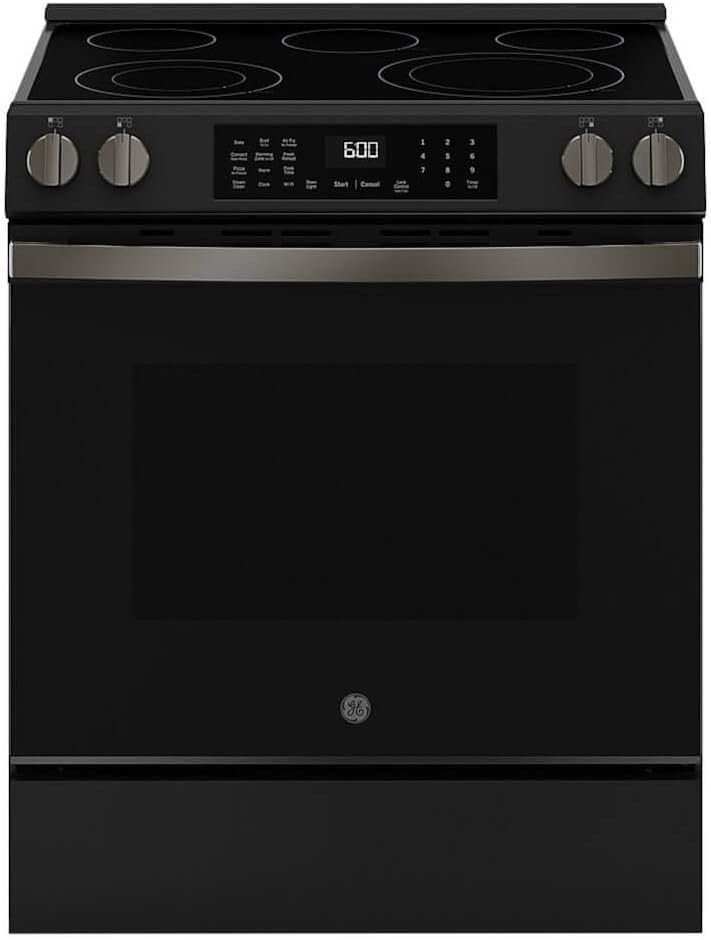 GE GRS600AVDS 5.3 Cu. Ft. Black Slate Slide-In Electric Convection Range with Steam CleaningBest overall pick · $1,049.99Check Price on Amazon
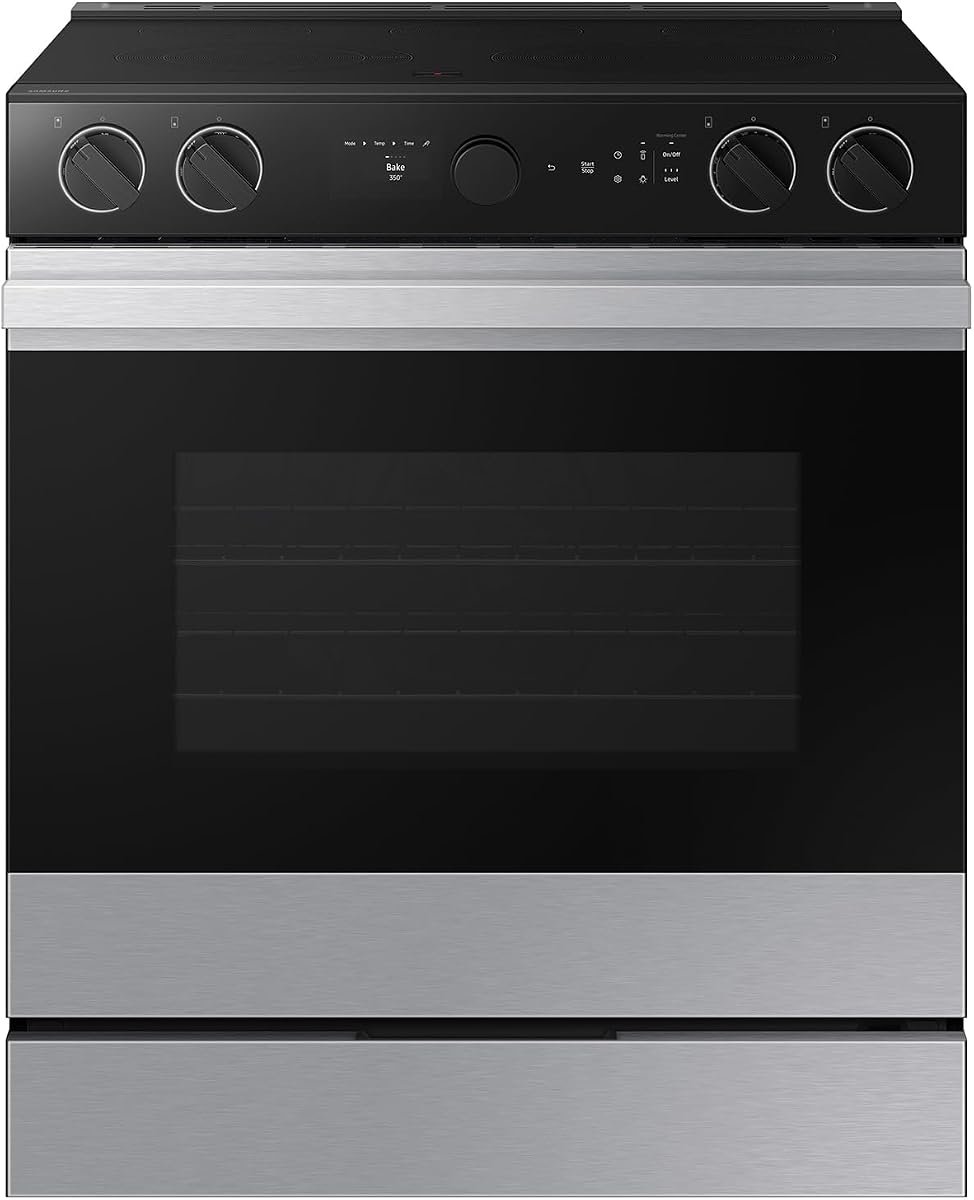 SAMSUNG Bespoke Smart Slide-In Electric Range 6.3 cu. ft. with Smart Oven Camera & Illuminated Precision KnobsBest value for money · $2,499.00Check Price on Amazon
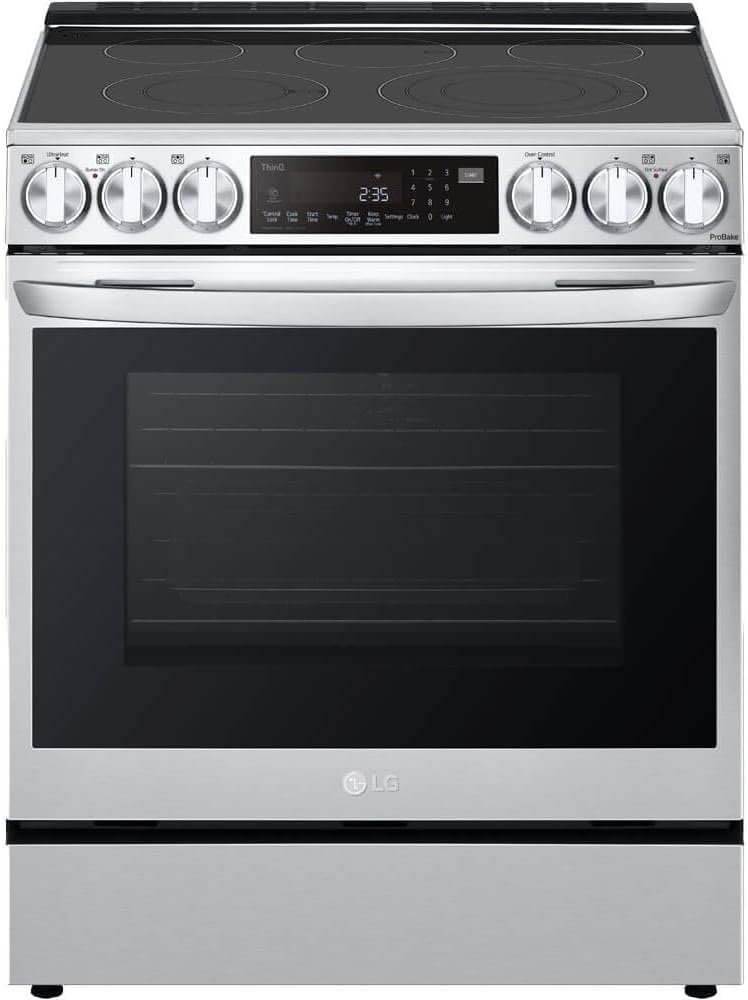 LG 30 in. 6.3 cu. ft. 5 Burner Element Slide-in Electric Range in PrintProof Stainless Steel w/Instaview, AirBest premium pick · $2,309.00Check Price on Amazon
This guide is written for shoppers, not for a test kitchen. The Spoonist does not test products, and we are not going to pretend otherwise.
What we can do is walk you through the decision points that separate a range you will love from one you will resent, and show how those decisions play out across real listings.
We will use four current Amazon listings as working examples: two electric slide-ins from GE and Samsung, a higher-capacity LG electric model, and one gas slide-in from GE that is useful as a comparison point for anyone still deciding between fuel types.
Along the way we will flag exactly which numbers to verify on the listing itself, because manufacturer specs and listing details change.
What “Slide-In” Actually Means (And Why It Changes Your Shopping List)
A slide-in range is designed to sit between two runs of cabinetry, with the cooktop edge overlapping the countertop slightly so the front looks built in.
That is different from a freestanding range, which has finished sides and typically stands slightly proud of the counter, and different again from a drop-in range, which has no finished bottom drawer area and hangs from the countertop cutout.
If you are replacing a freestanding range with a slide-in, the cabinet opening is usually the same nominal width, but the trim and overlap details are not. Measure the opening, not the old appliance.
The practical consequence is that slide-in shopping starts with fit, not features. You need the cutout width, the cutout depth, and the height range the leveling legs allow.
You also need to know where your electrical connection lives, because a slide-in’s rear panel and terminal block position can interfere with an outlet that sits low and centered behind the unit.
None of that is glamorous, but getting it wrong is the single most common reason a range gets returned.
There is also a styling trade-off. Slide-ins generally give you a cleaner, more integrated look and often put the controls at the front rather than on a rear console.
Front controls are easier to reach, but they are also more exposed to bumps from kids and grocery bags, and some people find them easier to accidentally graze.
Rear-console controls keep the knobs out of the way but add a visual block at the back of the cooktop. Neither is objectively better; it depends on your household.
Start With the Cutout, Not the Cooktop
Before you compare wattage, convection, or smart features, confirm three measurements against the listing’s specification section: the required cutout width, the required cutout depth, and the minimum and maximum installed height.
A range that is a quarter inch too wide for your opening is not a range you can buy, no matter how good the price is.
If the listing does not publish a cutout diagram, that is a signal to look for the manufacturer’s installation guide before ordering, not after.
Depth matters more than people expect. Slide-ins are designed to overlap the counter at the front, so the body depth and the cooktop overhang both affect how the unit sits relative to your cabinet faces.
If your counters are an unusual depth, or if there is a wall or window sill directly behind the range, the rear trim and any rear venting can create a clearance problem. Check the listing for required rear clearance and any statement about zero-clearance installation.
Height is the third leg of the stool. Most slide-ins have leveling legs that let you match the cooktop to your counter height, but the range of adjustment varies.
If your counters are set at an atypical height, confirm the adjustment range in the listing rather than assuming it will work.
And if you are switching fuel types, the electrical or gas connection itself becomes a project: a slide-in electric range needs an appropriate circuit, and a gas slide-in needs a gas line plus a electrical connection for ignition and controls.
Verify the amperage and plug type on the listing, and if those numbers are not published, ask before you buy.
Capacity: Cubic Feet Is a Starting Point, Not the Whole Story
Oven capacity is quoted in cubic feet, and it is one of the few specs that is genuinely comparable across brands. The listings in this guide span 5.3 cu. ft. to 6.3 cu. ft., which is a meaningful spread.
A larger oven is easier to live with if you roast large cuts, bake multiple sheets at once, or cook for a crowd.
A smaller oven heats a bit faster in principle and takes up less visual space, but the difference in usable interior is more about rack configuration than raw volume.
What cubic feet does not tell you is whether the racks are positioned usefully, whether the oven has a third rack element, or whether the door and handle geometry let you slide a heavy roasting pan in without scraping your knuckles.
Those are things you assess from photos, owner questions, and the listing’s included-accessories section. If a listing mentions a specific rack count or a broiler pan, treat that as a real feature; if it does not, assume nothing.
One more capacity note: cooktop burner count and layout matter as much as oven volume. A five-element cooktop gives you more flexibility for simultaneous pots, but the size and placement of those elements determines whether a large skillet and a stockpot can coexist.
Look at the element layout diagram in the listing photos and ask whether the arrangement matches how you actually cook. If the listing does not state element sizes, that is a detail to confirm before purchase.
Convection, Steam Cleaning, and Other Features Worth Paying For
Convection is the feature most shoppers ask about first. In an electric range, a convection fan circulates heated air around the oven cavity, which generally promotes more even browning and can shorten cooking times for some foods.
It is a genuinely useful feature for baking and roasting, and it is one of the clearer dividing lines between budget and mid-range slide-ins. If you bake often, prioritize it. If you mostly reheat and broil, it is nice to have but not decisive.
Cleaning systems are the other big fork in the road.
Steam cleaning uses a short, low-temperature cycle to loosen light soils so you can wipe them away; it is gentler and faster than a full self-clean cycle, but it is not designed for heavy baked-on grease.
Traditional self-cleaning uses high heat to reduce residue to ash. The listings here emphasize steam cleaning, which is a reasonable choice for households that clean regularly and want to avoid the heat and odor of a full self-clean cycle.
Whichever you choose, check the listing for the specific cleaning modes offered rather than assuming a given model includes both.
Beyond those two, the feature list gets more personal. Air fry modes, warming drawers, and built-in temperature probes are conveniences that some cooks use constantly and others never touch. The honest approach is to list the three things you do most in your oven and buy for those, then treat everything else as a bonus. Features you will not use are just things that can break.
Smart Features and Controls: Useful, or Just Another App?
Connected ranges have moved from novelty to mainstream, and the listings in this guide reflect that. Smart features typically include app-based monitoring, notifications when a cycle finishes, and sometimes remote preheating or recipe guidance. An oven camera is a newer addition that lets you check on food from your phone without opening the door, which sounds gimmicky until you are roasting something and do not want to lose heat.
The question to ask is whether the smart layer adds convenience you will actually use or adds a dependency you will resent. App connectivity is only as good as the app, and app support can change over the life of the appliance.
Controls are the more durable consideration: knobs versus touch panels, illuminated versus plain, and how easy they are to read and clean. Front-mounted knobs on a slide-in are convenient but exposed; touch controls are sleek but can be fussy with wet or floury hands.
Neither is wrong, but be honest about how you cook.
If a listing emphasizes a specific control feature, such as illuminated knobs, treat that as a design and usability detail rather than a performance claim. It affects how the range looks and how easy it is to operate in a dim kitchen, and that is a legitimate reason to prefer one model over another.
Electric vs. Gas Slide-In: A Quick Reality Check
This guide focuses on electric slide-ins, but the product set includes one gas model, and it is worth explaining why that matters.
Electric slide-ins generally offer more precise low-heat control for simmering and melting, and they pair naturally with convection ovens because the oven element and fan are both electric.
Gas slide-ins offer instant visual feedback from the flame and are often preferred by cooks who want direct control over charring and wok cooking. The trade-off is that gas requires a gas line and ventilation planning, while electric requires an appropriate circuit.
If your kitchen already has one fuel type, converting is a real project with real cost, and it is rarely worth doing just to chase a feature.
If you are building or remodeling and the choice is open, decide based on how you cook and what infrastructure you are willing to install.
The rest of this guide walks through specific listings so you can see how the decision points above show up in real products and real prices.
How We’re Evaluating These Listings
To be clear about method: The Spoonist does not test ranges. We have not cooked on these units, measured their heat distribution, or timed their preheat cycles.
What follows is a structured read of each listing, using the facts published there, plus guidance on what to verify before you buy. Prices and ratings are as listed on Amazon at the time noted in the product data, and they change.
Review counts on major appliances are often low, so a rating based on a handful of reviews should be treated as a weak signal, not a verdict.
With that framing, here is how the four listings compare on the dimensions that matter most.
| Model | Type | Listed Price | Listing Rating | Capacity |
|---|---|---|---|---|
| GE GRS600AVDS 5.3 Cu. Ft. Black Slate Slide-In Electric Convection Range with Steam Cleaning | Electric slide-in | $1,049.99 | 3.9 | 5.3 cu. ft. |
| SAMSUNG Bespoke Smart Slide-In Electric Range 6.3 cu. ft. with Smart Oven Camera & Illuminated Precision Knobs | Electric slide-in | $2,499.00 | 4.3 | 6.3 cu. ft. |
| LG 30 in. 6.3 cu. ft. 5 Burner Element Slide-in Electric Range in PrintProof Stainless Steel w/Instaview, Air | Electric slide-in | $2,309.00 | 4.3 | 6.3 cu. ft. |
| GE GGS600AVFS 30 inch Slide-In Gas Convection Range with Steam Cleaning and EasyWash Tray, Stainless Steel | Gas slide-in | $1,049.00 | 3.9 | Not stated in listing data |
Product-by-Product: What Each Listing Tells You
GE GRS600AVDS 5.3 Cu. Ft. Black Slate Slide-In Electric Convection Range with Steam Cleaning
The GE GRS600AVDS 5.3 Cu. Ft. Black Slate Slide-In Electric Convection Range with Steam Cleaning is the entry point in this group, and it is the one that will appeal most to shoppers who want convection and a slide-in profile without paying a premium.
The listing describes a 5.3 cu. ft. oven with convection and steam cleaning, finished in black slate, which is a darker, less reflective alternative to stainless that some kitchens will prefer.
Strengths to weigh
- Convection plus steam cleaning at the lowest listed price in this group
- 5.3 cu. ft. capacity is a reasonable middle ground for most households
- Black slate finish is a distinctive alternative to stainless
Trade-offs to check
- Smaller oven than the 6.3 cu. ft. models here
- Listing rating is based on a very small number of reviews
- Verify cutout dimensions and circuit requirements on the listing
Because the review base is thin, the rating should not carry much weight on its own.
Instead, use the listing to confirm the things that matter: the exact cutout width and depth, the required circuit amperage, and whether the convection fan and steam-clean cycle are both included as described. If the listing does not state element sizes, ask.
The value case here is straightforward: you are getting the core features that most cooks want, at roughly the price of the gas model in this set.
SAMSUNG Bespoke Smart Slide-In Electric Range 6.3 cu. ft. with Smart Oven Camera & Illuminated Precision Knobs
The SAMSUNG Bespoke Smart Slide-In Electric Range 6.3 cu. ft. with Smart Oven Camera & Illuminated Precision Knobs sits at the top of this group on price, and the listing leans hard into the smart-kitchen story. The headline features are the 6.3 cu. ft.
oven, an oven camera you can check from your phone, and illuminated precision knobs that are meant to be both easier to read and nicer to look at.
Strengths to weigh
- Largest oven capacity in this group at 6.3 cu. ft.
- Oven camera adds a genuinely useful check-in convenience
- Bespoke styling and illuminated knobs are a design-forward choice
Trade-offs to check
- Highest listed price here by a wide margin
- Smart features depend on app support over time
- Confirm the cutout and clearance requirements before ordering
Whether this range is worth the premium depends entirely on how much you value the smart layer and the larger oven. If you bake large batches or host often, the extra cubic feet are a real, everyday benefit.
If you rarely use an app in the kitchen, you are paying for features that will sit idle. The listing rating is based on a small number of reviews, so treat it as a directional signal at best.
Before buying, verify the cutout dimensions, the circuit requirements, and whether the camera and app features require a specific setup.
LG 30 in. 6.3 cu. ft. 5 Burner Element Slide-in Electric Range in PrintProof Stainless Steel w/Instaview, Air
The LG 30 in. 6.3 cu. ft. 5 Burner Element Slide-in Electric Range in PrintProof Stainless Steel w/Instaview, Air is the middle option on price and the closest direct competitor to the Samsung on capacity. It pairs a 6.3 cu. ft. oven with a five-element cooktop, a PrintProof stainless finish, and an InstaView window that lets you see into the oven without opening the door.
Strengths to weigh
- 6.3 cu. ft. oven matches the largest capacity in this group
- Five-element cooktop offers more simultaneous cooking flexibility
- PrintProof stainless is designed to resist fingerprints and smudges
Trade-offs to check
- Listing rating rests on a very small review base
- Element sizes and wattages are not stated in the listing data
- Confirm the 30-inch cutout and clearance details before purchase
The five-element layout is the detail that separates this from a standard four-element cooktop, and it is worth thinking about whether your cooking actually benefits.
More elements help when you routinely run several pots at once; they add little if you usually cook one or two things. The InstaView window is a convenience that reduces how often you open the door, which helps hold oven temperature.
As with the others, verify the cutout, the circuit amperage, and the exact element configuration on the listing, since those details drive both installation and day-to-day satisfaction.
GE GGS600AVFS 30 inch Slide-In Gas Convection Range with Steam Cleaning and EasyWash Tray, Stainless Steel
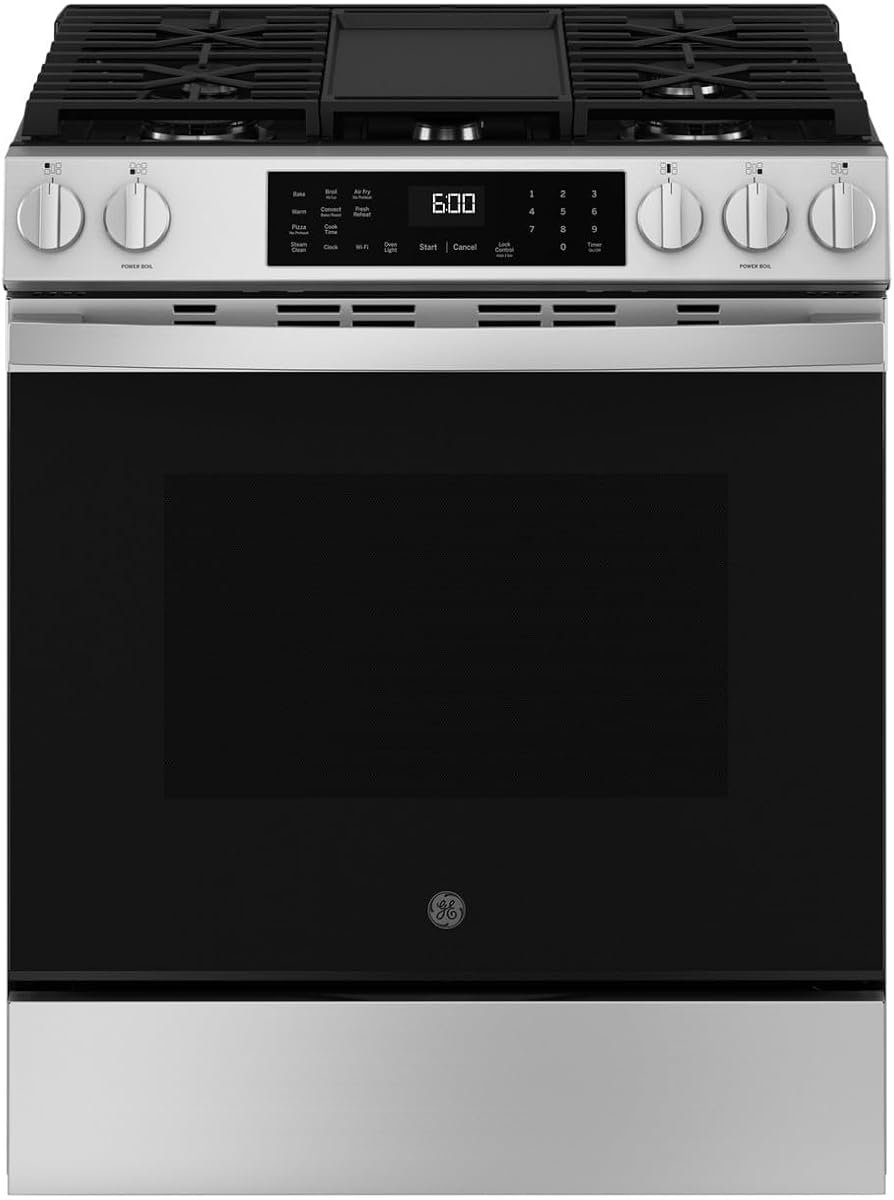
The GE GGS600AVFS 30 inch Slide-In Gas Convection Range with Steam Cleaning and EasyWash Tray, Stainless Steel is included here as the gas counterpart to the electric GE, and it is a useful reference point for anyone still deciding between fuels. It offers convection and steam cleaning, plus an EasyWash tray that is designed to simplify cleanup of the oven floor, all in a stainless steel finish.
Strengths to weigh
- Gas cooktop with convection oven and steam cleaning
- EasyWash tray targets the messiest part of oven cleanup
- Priced in line with the electric GE model here
Trade-offs to check
- Requires a gas line plus an electrical connection
- Oven capacity is not stated in the listing data
- Small review base means the rating is a weak signal
If your kitchen already has gas, this is the natural comparison to the electric GE, and the price is nearly identical. The deciding factors are the fuel itself and the installation requirements.
Gas gives you visual flame control; electric gives you the convection oven pairing and avoids the gas line. Because the listing data does not state oven capacity, check the listing directly if cubic feet matters to you.
Also confirm the gas connection type and the electrical requirements for the ignition and controls before ordering.
Installation and Electrical Prep: The Part Nobody Enjoys
Slide-in electric ranges are heavy, and they are not a casual DIY swap if the circuit is not already in place. Before ordering, confirm the circuit amperage and the plug type required by the listing, and compare that to what is behind your current range.
If the listing does not publish those numbers, that is a question for the seller or the manufacturer’s installation guide, not something to guess at. A mismatch here can mean an electrician visit, a new breaker, or a return.
Ventilation is the other half of the equation. Electric ovens produce heat and some smoke and odor during high-temperature cooking and self-clean cycles, and gas ranges produce combustion byproducts that should be vented.
If you are replacing like for like, your existing hood is probably adequate, but check its airflow rating against the range’s requirements if the listing states them. If you are switching from electric to gas, ventilation becomes a more serious consideration, not an afterthought.
Finally, plan the delivery path. Slide-ins often need the door removed and the unit maneuvered through tight kitchen spaces. Measure doorways and turns, and confirm whether the retailer offers installation and haul-away. These logistics do not change which range is best for you, but they absolutely change how painful the purchase is.
Maintenance Habits That Keep a Slide-In Range Looking New
Glass cooktops and stainless finishes are durable but not indifferent to how you treat them. Wipe the cooktop after each use once it has cooled, use a non-abrasive cleaner, and avoid sliding heavy cast-iron across the surface.
For stainless, follow the grain when cleaning and skip abrasive pads, which leave scratches that no polish will remove. If you chose a PrintProof or black slate finish, those surfaces are generally more forgiving of fingerprints, but they still benefit from regular wiping.
For the oven, the cleaning system you chose determines your routine. Steam cleaning works best when you run it before soils bake on hard, so a quick cycle after a messy roast is more effective than a heroic one a month later.
If your range has a self-clean cycle, use it sparingly and ventilate well. And check the door gasket periodically; a worn gasket costs you heat and evenness, and it is one of the cheapest parts to replace.
Frequently Asked Questions
Is a slide-in range better than a freestanding range?
It depends on your kitchen and your priorities. Slide-ins offer a more integrated, built-in look and often put controls at the front. Freestanding ranges are typically easier to swap and may cost less for comparable features. If your cabinets are already set up for a slide-in, replacing like for like is the simplest path.
How much oven capacity do I need?
The listings in this guide range from 5.3 cu. ft. to 6.3 cu. ft. For most households, either size handles everyday cooking. If you regularly roast large cuts, bake multiple sheets at once, or cook for a crowd, the larger end of that range is worth prioritizing. Check the listing for the exact capacity rather than assuming.
Do I need convection?
Convection circulates heated air for more even browning and can shorten some cooking times. It is genuinely useful for baking and roasting. If you bake often, prioritize it; if you mostly reheat and broil, it is a nice-to-have rather than a must.
Is steam cleaning as good as self-cleaning?
They solve different problems. Steam cleaning loosens light soils for easy wiping and is gentler and faster. Self-cleaning uses high heat to reduce residue to ash and handles heavier buildup. Choose based on how often you clean and how much baked-on mess you typically create.
Can I replace a freestanding range with a slide-in?
Often yes, if the cabinet opening and clearances work, but it is not automatic. Measure the cutout width, depth, and height range, and confirm the electrical or gas connection matches. If the listing does not publish cutout dimensions, find the installation guide before ordering.
Should I trust the star rating on a range listing?
Treat it as a weak signal when the review count is low, which is common for major appliances. A rating based on a handful of reviews tells you very little. Read the actual review text for patterns, and weigh the listing’s published specs and your own measurements more heavily.
Putting It Together: How to Pick Your Slide-In Electric Range
There is no single best slide-in electric range, because the right answer depends on your cutout, your circuit, and how you cook. Use this order of operations: measure your opening and confirm the electrical requirements first; decide whether you need the larger 6.3 cu. ft.
capacity or whether 5.3 cu. ft. is enough; decide whether convection and steam cleaning are must-haves; and only then compare prices and finishes. If you want the lowest-cost path to convection and steam cleaning, the GE GRS600AVDS is the value play in this group.
If capacity and smart features matter most, the Samsung Bespoke and the LG InstaView both offer 6.3 cu. ft. at different price points and with different feature emphases.
And if you are still weighing fuels, the GE gas model shows what the same money buys on the gas side.
Before you buy: confirm cutout width, cutout depth, height adjustment range, circuit amperage and plug type, and rear clearance. If any of those numbers are missing from the listing, get them in writing before you order. Those five details prevent more returns than any feature comparison ever will.
Also see our 4 qt air fryers buying guide for the best compact baskets.
As an Amazon Associate, The Spoonist earns from qualifying purchases. Product prices and availability are accurate as of the date/time indicated on Amazon and are subject to change.